Finding the right wood stain for guitars means balancing color, grain enhancement, and low odor while preserving tone and resonance. The top products below are ideal for guitar builders or refinishing enthusiasts seeking deep, authentic finishes without harsh fumes. Each option is selected for ease of use, compatibility with guitar woods, and reliable color results. Best for hobbyists, luthiers, and professionals who want predictable results when staining guitar bodies, necks, or hardware-free panels.
The following quick-reference table highlights five strong choices and who they’re best for:
| Product | Best For | Main Benefit |
|---|---|---|
| ColorTone Black Concentrated Liquid Stain | Professional finishing or color matching | Deep black tone with versatile mixing for wipe-on or finish-toning |
| Ninesung Purple Wood Stain | Bold color accents on artistic projects | Fast-drying, highly concentrated dye powder for vivid purple hues |
| DWIL Water Based Wood Stain (Teak) | Indoor/outdoor furniture and panels | One-coat, fast-drying, low-odor, non-toxic formula |
| Wood Dye Kit – Aniline Dye 5 Color Kit | Custom color experiments and multiple tones | Five colors in powder form for rich, flexible tuning |
| Limino Water Based Wood Stain (Red Cherry) | Everyday furniture and cabinetry projects | Eight color options and low-odor, UV-resistant finish |
ColorTone Black Concentrated Liquid Stain

Product summary: ColorTone’s deep black stain is a concentrated liquid that enriches wood grain and delivers authentic color. It is highly versatile, allowing dilution for wipe-on staining or direct mixing into clear lacquers for custom tone adjustments. A single 2-ounce bottle yields multiple workable batches. Best for luthiers seeking a true black base that can be tailored for guitar bodies, neck laminates, or control cavities. Caution: highly concentrated formulations can darken wood quickly; test on a scrap piece before full application.
Ninesung Purple Wood Stain

Product summary: NINESUNG wood dye powder is a fast-drying, highly concentrated option for indoor and outdoor wood surfaces. It works well for purple hues and provides even color penetration with water activation. Best for guitar tops or inlays where a vivid, contemporary purple finish is desired. Limitation: powder dyes require precise mixing and testing to achieve uniform color on curved guitar bodies.
DWIL Water Based Wood Stain (Teak)

Product summary: DWIL offers a one-coat, fast-drying, water-based stain with low odor and non-toxic characteristics. It suits both indoor and outdoor guitar components, providing a natural matte finish and enhanced grain texture. Best for builders prioritizing quick workflow and low odor during staining sessions. Caution: may require additional coats for deeper tones on dense woods.
Wood Dye Kit – Aniline Dye 5 Color Kit
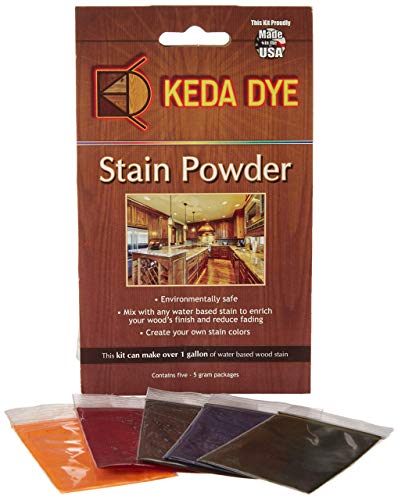
Product summary: This kit from Keda Dyes includes five wood dye colors, designed to create vibrant tonal variations. It can produce up to five quarts of liquid dye stain when mixed, making it suitable for experiments and extensive guitar projects. Best for practitioners who want broad color range and high pigmentation. Limitation: powdered dyes require careful mixing and testing for consistent color on curved surfaces.
Limino Water Based Wood Stain (Red Cherry)

Product summary: Limino’s Red Cherry stain offers a low-odor, non-toxic water-based option with eight color choices. It emphasizes preserving natural grain while delivering durable color for indoor projects like guitar bodies, cabinets, and panels. Best for players seeking a balanced, warm red tone with safer indoor use. Caution: some colors may require multiple coats to reach full depth on resin-filled woods.
Buying Guide
What should you consider when choosing a wood stain for guitars?
- Color and depth: Decide whether you want a deep, opaque color or a transparent, grain-enhancing finish. Concentrated liquids and powders offer more control for custom tones.
- Wood type compatibility: Guitars use a range of woods (maple, alder, ash, mahogany). Some stains penetrate deeply, while others emphasize grain with a semi-transparent look. Test on a scrap piece from similar wood.
- Drying time and odor: For studio or shop workflows, fast-drying and low-odor formulas minimize disruption and safety concerns around fumes.
- Finish compatibility: Water-based stains are often easier to clean and safer for indoor use, but may interact differently with lacquer or polyurethane clear coats. Ensure compatibility with your topcoat.
- Application method: Wipe-on, brushing, or mixing into clear finishes can all affect final color and texture. Wipe-on types offer more even control on curved surfaces like guitar bodies.
- Ease of cleanup and safety: Non-toxic and low-VOC formulas reduce environmental and health concerns, which is important for hobbyists and professionals alike.
FAQ
- What stain is best for a black guitar finish?
– A highly concentrated dark stain like ColorTone Black Concentrated Liquid Stain is designed to produce a deep black tone with the option to dilute for lighter effects. - Can I use powder dye on a guitar body?
– Yes, powder dyes such as Ninesung Purple Wood Stain or the Aniline Dye Kit can be mixed with water and applied to wood, but require careful mixing and testing for even color on curved surfaces. - Are water-based stains safe for indoor guitar work?
– Yes. Water-based stains like DWIL Teak, Limino Red Cherry, and Furniture Clinic options are generally low odor, non-toxic, and suitable for indoor applications when properly used. - How many coats are needed for a typical guitar finish?
– One coat can provide a natural matte look, but achieving deeper color or uniform depth often requires multiple coats or controlled layering, depending on wood species and stain type. - Should I test stain color before committing to the entire guitar?
– Always test on a scrap piece or a hidden test area to confirm color depth, grain enhancement, and coating compatibility with your topcoat. - Is a dye-based stain better than a pigment-based stain for guitars?
– Dyes (powder or liquid) offer vibrant color and deeper penetration, while pigment-based stains provide more even coverage and less wood grain highlighting. For guitars, dyes are often chosen for controlled tonal depth and grain visibility.