For buyers seeking reliable concrete wall waterproofing paint, these top picks address different needs—from interior basement walls to exterior masonry surfaces. This guide explains who each product is best for, why it was selected, and practical cautions. Use the table below to compare core options at a glance and then read detailed sections to understand nuances like alkali resistance, drying times, and compatibility with basements, foundations, and above-grade walls.
| Product | Best For | Key Benefit | Caution |
|---|---|---|---|
| KILZ Basement and Masonry Waterproofing Paint | Basements and masonry walls | Nanotechnology water barrier | Not for floors or active leaks |
| Ames Block & Wall Liquid Rubber | Foundations and basements | Flexible rubber coating | White color may require topcoat |
| INSL-X WaterBlock | Interior/exterior vertical walls | High alkali resistance | Priming may be needed for very porous surfaces |
| TUFINEIN Rubber Sealant | Small to mid-size repairs | Elastic, remains flexible | Not ideal as a sole walking surface |
| Zinsser WaterTite-LX | Mold and mildew prone walls | Mildew-proof water resistance | Latex-based finish; ensure proper curing |
KILZ Basement and Masonry Waterproofing Paint
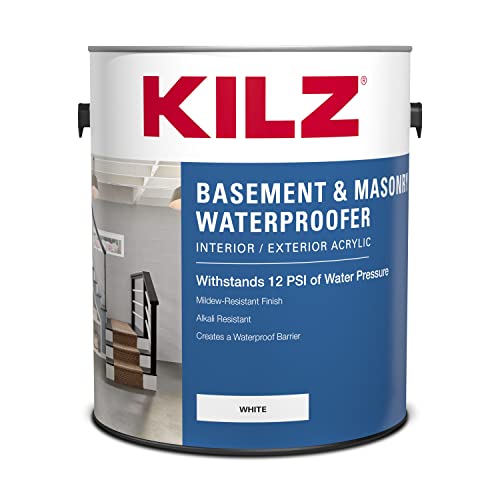
KILZ offers a nanotechnology-based waterproofing paint designed to block up to 12 PSI of water pressure. It is suitable for both interior and exterior concrete, brick, and masonry walls. The formula is resistant to alkali, helping to maintain a durable finish in humid basements and noisy exterior environments. Best for buyers who need a versatile, high-performance wall coating that works in damp spaces but should not be used on floors or active leaks. For below-grade use, seal cracks with hydraulic cement first.
Ames Block & Wall Liquid Rubber
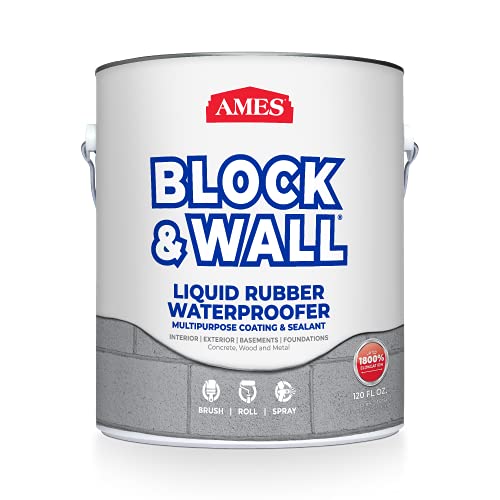
AMES Block & Wall is a white liquid rubber coating designed as a flexible sealer for basements and foundations. Its elasticity allows for movement and crack resistance, making it a solid choice for foundations with minor shifting. Best for buyers seeking a robust, film-forming sealant rather than a standard paint. Consider this if you want a seam-friendly option that maintains flexibility over time. Note that the white finish may require a topcoat for color consistency in some projects.
INSL-X WaterBlock Acrylic Masonry Paint
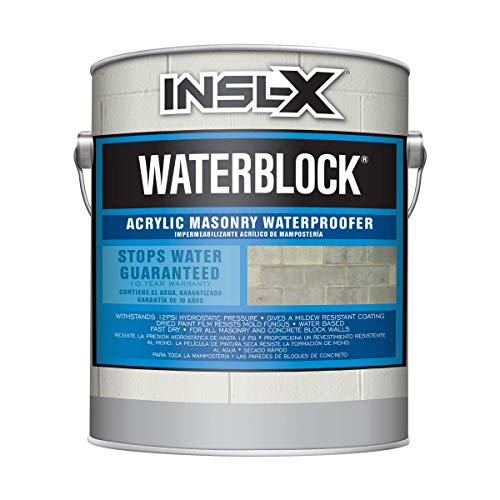
INSL-X WaterBlock is a water-based coating ideal for sealing vertical interior and exterior concrete walls. It dries quickly and offers high alkali resistance up to pH-13, suitable for basements, foundations, and retaining walls. Best for buyers who want a fast-drying option with strong chemical resistance. It may require priming on very porous surfaces to achieve an even finish.
TUFINEIN Rubber Sealant

TUFINEIN is a flexible rubber sealant designed to cover small gaps and cracks with a durable, elastic coating. It cures quickly and remains flexible in a wide temperature range, making it suitable for indoor and outdoor use on concrete and other substrates. Best for buyers who need a waterproof sealant to address small leaks and gaps. A limitation is that it is not intended for heavy traffic or walking surfaces.
Zinsser WaterTite-LX Mold & Mildew-Proof

Zinsser WaterTite-LX is a latex-based mold and mildew-proof waterproofing paint. It claims to resist up to 20 pounds of water pressure and provides a smooth, bright white finish that applies easily with brush or roller. Best for buyers who prioritize mildew control and a non-gritty surface. It is important to allow proper curing to maximize its mold resistance and water protection.
Buying Guide
- Surface type and location: Choose interior basement walls for moisture control in enclosed spaces, or exterior walls for weather protection. Some products perform better in high humidity or chemical exposure (alkali resistance).
- Water pressure and leaks: For active leaks, a robust membrane or rubber sealant may be more effective than conventional paint. Consider combining with crack fillers for best results.
- Flexibility and movement: Foundations can shift. Flexible coatings reduce cracking and maintain a continuous barrier over time.
- Drying time and application: Fast-drying formulas enable quicker project completion but require careful surface preparation. Porous surfaces may need priming.
- Appearance and finish: If aesthetics matter, select a white or light finish with good coverage. Some products cure clear, which preserves visible surface texture.
- Maintenance and cleaning: Consider how the coating stands up to humidity, mildew, and cleaning agents. Mildew-proof formulas help in damp spaces.
Frequently Asked Questions
- What is the difference between concrete paint and sealant? Concrete paints provide color and a protective film, while sealants focus on waterproofing and sealing cracks. Some products combine both benefits.
- Can I apply waterproofing paint over old paint? Yes, but the surface should be cleaned, dried, and usually primed if the old coating is peeling or glossy.
- Is alkali resistance important? Yes. Concrete and masonry surfaces have high alkalinity; resistance reduces chalking and paint degradation over time.
- Should I use a primer? Primers improve adhesion and evenness on porous surfaces and can help prevent efflorescence on masonry.
- How do I prep a basement wall before painting? Clean, repair cracks with hydraulic cement or appropriate filler, and ensure walls are dry before coating.
- Are these products safe for living spaces? Many are water-based and lower in odors, but always ventilate and follow label directions during use.