Finding the right fine wet and dry sandpaper can make automotive touch-ups, wood furniture finishing, and metal refinishing both faster and cleaner. This guide highlights five top choices that cover ultra-fine to fine grits, suitable for wet or dry use, and emphasizes who each product is best for. Whether you’re a hobbyist smoothing furniture or a professional detailer refining paint, these picks balance grit variety, durability, and practicality.
The following table provides a quick comparison of the selected products to help you decide at a glance.
| Product | Grit Range | Best For | Notes |
|---|---|---|---|
| BAISDY 45Pcs Wet Dry Sandpaper | 400–3000 | Automotive polishing, wood finishing, metal polishing | Broad grit range in 9 x 3.6 inch sheets; great starter kit |
| BMOTL 42Pcs Wet Dry Sandpaper | 1000–5000 (plus 5000) | Car detailing, wood finishing, metal smoothing | Ultra-fine set designed for automotive and finer work |
| CooBigo 24PCS Sandpaper Assortment | 120–3000 | All stages of wood and metal finishing | Includes broad range with a balance of coarse and fine grits |
| AUSTOR 30 Pieces | 2000–10000 | Fine woodworking, detailed automotive work | High-grit emphasis for ultra-smooth finishes |
| 3M Wetordry Sandpaper 220 Grit | 220 | Between coats, initial smoothing for finishes | Trusted brand; good for initial steps before finer grits |
BAISDY 45Pcs Wet Dry Sandpaper
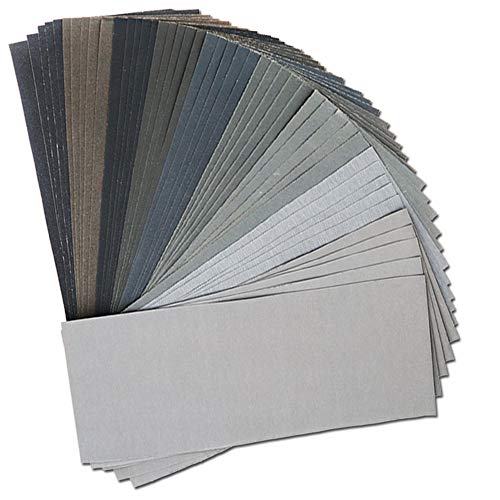
The BAISDY kit offers a wide grit spectrum from 400 to 3000, with multiple sheets per grit. Best for buyers who want a single, versatile set for automotive polishing, metal finishing, and wood furniture work. The 9 x 3.6 inch sheets are easy to cut and fold for tight spaces, making this suitable for beginners through intermediate users. Be aware that heavier projects may still require more aggressive grits before finishing with ultra-fine options.
BMOTL 42Pcs Wet Dry Sandpaper

This assortment centers on ultra-fine grits (1000–5000 and 5000), making it especially suited for car detailing, wood furniture finishing, and metal polishing. It’s best for buyers who already have coarser work completed and want to refine surfaces to near-reflective finishes. A potential limitation is that the pack emphasizes finer grits; when heavy material removal is needed, a separate coarser kit may be required).
CooBigo 24PCS Sandpaper Assortment

The CooBigo set covers 120 to 3000 grit, combining coarse and fine for flexible use across wood, metal, and automotive projects. It’s well-suited for buyers who want a balanced kit without committing to a single brand’s ecosystem. A caveat is that the 24-piece assortment may require separate tools or blocks for optimal performance at very fine grits.
AUSTOR 30 Pieces Wet and Dry Sandpaper
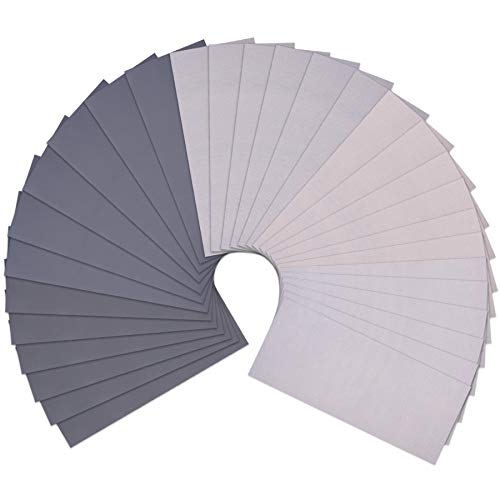
The AUSTOR kit emphasizes very high-grit options (2000–10000), ideal for final finishes on woodworking or automotive surfaces. Choose this if your goal is ultra-smooth results and you’re comfortable pairing it with a coarser kit for material removal. The downside is that it provides less coverage at lower grits, so a separate supply for initial steps may be necessary.
3M Wetordry Sandpaper 220 Grit

3M’s 220 grit Wetordry is a classic first-step option for between-coats or heavy prepping where a sharp, fast-cut is required, especially when used with water to control dust and clogging. Best for buyers who want a reliable, premium base grit to pair with finer sheets. It’s not designed for finishing but excels at initial smoothing before finer grits.
Buying Guide: Key Purchase Considerations
What grit range do I need for a project?
For wood finishing and automotive detailing, start with coarse to mid grits (120–400) to remove material, then progress through finer grits (400–2000) for a smoother base. Ultra-fine grits (2000–10000) are ideal for final polishing and achieving a near-glass finish. A multi-pack with a broad range makes sense for varied tasks.
Wet vs. dry sanding: which should I choose?
Wet sanding reduces dust and heat buildup, ideal for automotive paint correction and finished wood surfaces. Dry sanding removes material quickly and is convenient for rough prep and metal work. If you see both use cases in a project, choose a kit that supports wet/dry versatility.
Sheet size and ergonomics
Most kits use 9 x 3.6 inch sheets, which fit common sanding blocks and hand tools. Larger sheets cover more area; smaller sheets are easier to maneuver in tight corners. Flexibility to cut sheets to size is a plus for irregular shapes.
Durability and grit distribution
Electrostatic or evenly distributed grit improves performance and wear resistance. Silicon carbide is a common material for fine grits and wet/dry use because it stays sharper longer and resists clogging under moisture.
Brand and compatibility considerations
Trusted brands often provide more consistent grit quality and better edge wear. If you already use a specific brand for polishing compounds or along with sanding blocks, matching grit compatibility can yield more predictable results.
Safety and usage tips
Use appropriate eye protection and a dust mask when sanding. Keep the workpiece damp or use cutting oil with finer grits to minimize dust and heat. Always test a small area first to gauge results before full application.
FAQ
- Is it better to sand wet or dry for wood furniture finishing? Wet sanding reduces dust and can yield a smoother surface, while dry sanding is faster for initial material removal. Use a mix of both for best results.
- What grit should I start with on automotive repaint prep? Start with a coarse grit (120–400) to remove existing coatings, then move through progressively finer grits to prepare for polishing.
- Can I cut these sheets to smaller sizes? Yes. Most sheets are easily cut to fit hand tools or tight spaces without compromising grit integrity.
- What is the advantage of silicon carbide sandpapers? Silicon carbide provides sharp, uniform grit, resists wear, and performs well in both wet and dry applications.
- How many sheets should I buy for a multi-step project? A multi-pack with at least 5–6 grits should cover rough prep to finishing, reducing the need to reorder mid-project.