Answering the question most DIYers ask: which air nailer is best for trim and finish work? The right pistol-grip, lightweight finish nailer lets you attach trim and molding with clean, blemish-free results. This guide focuses on 18- and 16-gauge options and a 15-gauge angled nailer for crown moldings, baseboards, window casings, and picture-frame work. Each pick targets different user needs—professional remodelers, DIY enthusiasts, and hobby woodworkers can find a best fit here.
Below is a quick summary of the five recommended products. The table highlights the best use case, gauge, and notable strengths to help you compare at a glance.
| Product | Best For | Gauge/Nail Range | Key Benefit |
|---|---|---|---|
| Metabo HPT Brad Nailer NT50AE2 | Precise trim and furniture details | 18-gauge, 5/8″–2″ | Selective actuation for bump or sequential firing |
| Metabo HPT Finish Nailer NT65MA4 | Crown/base moldings and casing | 15-gauge, 1¼”–2½” | Angled, lightweight for hard-to-reach areas |
| Metabo HPT Finish Nailer NT65M2S | General molding and cabinetry | 16-gauge, 1″–2½” | Selective actuation; comfortable for long sessions |
| NEU MASTER Pneumatic Brad Nailer NP30 Series | Versatile trim and small projects | 18-gauge, 5/8″–2″ | 2-in-1 nailer/stapler option with fast reloads |
| POPULO 2″ Pneumatic Brad Nailer | Cabinetry and furniture trim | 18-gauge, 5/8″–2″ | Depth adjust and jam-clear for efficiency |
Metabo HPT Brad Nailer NT50AE2

The NT50AE2 is designed for precise trim work and furniture building. It accepts 18-gauge brad nails from 5/8″ to 2″ and offers a selective actuation switch, letting you switch between bump fire and sequential modes. This provides better control on delicate trim, reducing the chance of over-driving fasteners. Best for: professional finish carpentry and serious DIY projects where precision matters. Caution: avoid prolonged bump-fire use on very soft woods to minimize splitting; switch to sequential mode for fine detailing.
Metabo HPT Pin Nailer NP35A

While primarily a pin nailer, this tool is ideal for cabinet making and delicate trim where invisible fasteners are desired. It’s lightweight and well-suited for tight spots. Best for: fine cabinetry and subtle detailing where visible nail heads must be avoided. Caution: 23-gauge pins leave tiny holes that still require filler if you’re aiming for completely invisible fasteners in high-visibility trim.
Metabo HPT Finish Nailer NT65MA4

This 15-gauge angled finish nailer is ideal for crown and base moldings, window casings, and cabinetry. It weighs about 4.2 pounds, which keeps fatigue down during long trim sessions. Best for: general trim and molding projects where angled reach and maneuverability improve installation. Caution: heavier than some 18-gauge options; use for longer sessions to avoid wrist strain.
POPULO 2″ Pneumatic Brad Nailer
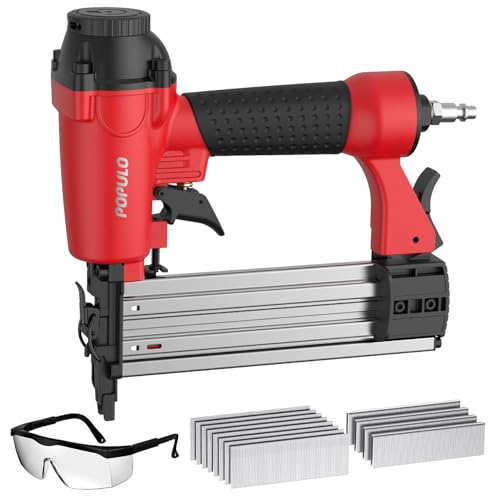
POPULO’s 2″ Brad Nailer combines 18-gauge brad nails with a 360° exhaust and tool-free jam clearing. It’s lightweight and designed for ergonomic comfort during extended trim work. Best for: DIYers tackling various trim, cabinet, and furniture projects with a need for quick clear jams. Caution: ensure air supply matches tool requirements to avoid misfires or reduced performance.
NEU Master Pneumatic Brad Nailer NP-Model
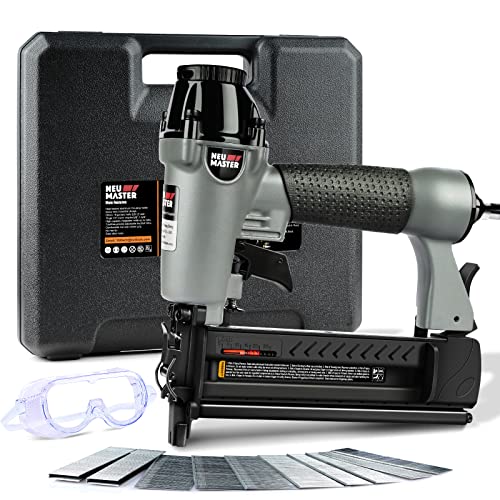
NEU MASTER’s 2-in-1 tool combines brad nailing and stapling, allowing quick swaps between tasks such as trim, molding, and upholstery. It accepts 18-gauge brads from 5/8″ to 2″ and staples from 5/8″ to 1-5/8″. Best for: projects requiring both nails and staples in one session. Caution: 2-in-1 functionality can mean a slightly larger tool footprint; ensure your work area has space to maneuver.
Meite F50C Pneumatic Brad Nailer

The Meite F50C handles 18-gauge brad nails from 5/8″ to 2″ and requires a compatible air compressor. It’s positioned for trim work and smaller finish tasks with a 70–100 PSI operating range. Best for: home workshops needing a reliable, compact nailer for trim and molding. Caution: ensure your compressor can sustain consistent pressure to avoid under-driving nails on dense wood.
Buying Guide: Key Considerations For Choosing The Right Trim Nailer
- Gauge and nail range: 18-gauge brad nails are ideal for delicate trim, while 15- or 16-gauge finish nails are better for heavier trim and moldings. Choose based on trim thickness and material density.
- Angle and reach: Angled finish nailers help in tight corners and around crown molding. If you work in cramped spaces, a beveled or 15- or 16-degree angle can be advantageous.
- Fire modes: Selective actuation (bump vs sequential) offers flexibility. Sequential is safer for precision work; bump fire speeds up installation on larger runs but can risk dimples or misfires if you’re not careful.
- Weight and comfort: Lighter tools reduce fatigue during long sessions. Consider models around 3–4 pounds for extended trim jobs and battery-free pneumatic systems for continuous use.
- Air compatibility: Ensure your compressor’s PSI and CFM align with the nailer’s requirements. Underpowered air supply can cause jams or under-driven nails.
- Jams and maintenance: Tool-free jam clearing and exhaust outflow design help keep your line of work clean and efficient. Look for models with easy jam-clearing access.
- Accessories: Consider included features like depth adjustment, nose guard, and carrying case. These features affect long-term usability and project accuracy.
FAQ: Quick Answers For Trim Nailing Needs
- What gauge is best for trim? – 18-gauge brads are ideal for lightweight trim and delicate finish work; 15- or 16-gauge nails are better for heavier moldings.
- Do I need a compressor? – Yes. Pneumatic nailers require an air compressor. Check PSI and CFM requirements for your chosen tool.
- Is an angled finish nailer worth it? – Yes, for crown moldings, baseboards, and tight corners where straight-nose nails can’t reach easily.
- Which feature helps prevent misfires? – A sequential firing mode helps control nail placement and reduces accidental firing on delicate trim.
- Can I use a 2-in-1 nailer for trim and upholstery? – Some 2-in-1 tools support staples in addition to brads, offering versatility for upholstery and trim tasks.
- What’s a good starter nailer for trim? – A lightweight 18-gauge brad nailer with a depth-adjustment feature provides a solid balance of control and ease of use for beginners.