Looking for a sand machine for walls that delivers dust control, reach, and precision? This guide highlights five top drywall sanders and compatible tools to help you choose the right model for ceilings, walls, and textured surfaces. It targets buyers who want efficient dust management, versatile speed control, and clear visibility while sanding. The table below compares key picks at a glance.
| Product | Best For | Key Feature | Power Range |
|---|---|---|---|
| Borsstyne Drywall Sander | Home DIY to light professional work | Dustless vacuum system with LED | 9-level variable speed |
| Gioventù Drywall Sander | Ceiling sanding and hard-to-reach areas | 7-speed, 750W, long power cord | 900–1800 RPM |
| BBBuy 800W Drywall Sander | Larger projects and extended reach | Extendable handle up to 5 ft | 1000–2000 RPM |
| VEVOR Drywall Sander | Professional-grade, bright illumination | Double-deck LED lights, foldable | 1000–2300 RPM |
| HYQWE Sanding Sponges | Detail work and tight corners | 5 grits, washable and reusable | Various |
Borsstyne Drywall Sander With Dustless Vacuum System
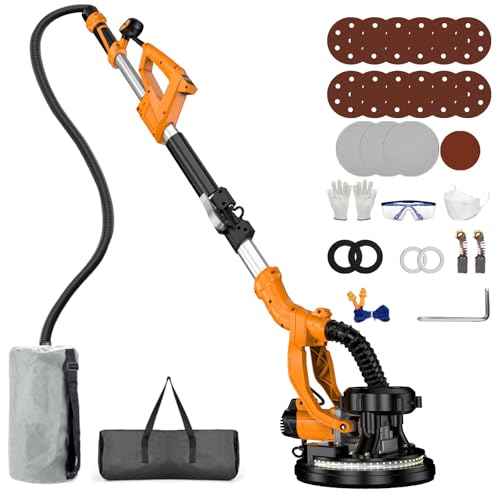
Best for: Homeowners and DIY enthusiasts who want a cleaner sanding process with integrated dust control. Why selected: It combines a built-in dust collection system with a large-capacity bag and a flexible hose, minimizing airborne dust during popcorn ceiling removal and wall smoothing. The 9-level variable speed lets you tailor grit and pressure to different surfaces, while the integrated LED light provides illumination in dark corners. Limitation: Dust control performance relies on the vacuum system and bag capacity, so plan for frequent bag changes on large jobs.
Gioventù Drywall Sander With Vacuum Attachment

Best for: Projects needing strong power and ceiling access. Why selected: It uses a 750W motor with a 7-speed range (900–1800 RPM) to speed up removal of popcorn textures and drywall coatings. The design emphasizes ease of use at vertical angles and full surface reach with a swiveling floating head. Caution: As with any high-powered sander, work in short sessions to prevent overheating and conduit wear on long jobs.
BBBuy 800W Drywall Sander With Extendable Handle

Best for: Larger wall and ceiling projects needing extra reach. Why selected: This sander delivers 800W of power and features an extendable handle up to 5 feet, letting you comfortably sand high ceilings or tall walls. The swiveling head supports multi-angle sanding, helping you access corners and tight spots. Limitation: Heavier weight may cause user fatigue on long sessions; take breaks and use a powered extendable setup to minimize strain.
VEVOR Drywall Sander With LED Lighting

Best for: Professional renovation and contractor use where visibility is key. Why selected: It pairs an 800W brushless motor with a wide speed range (1000–2300 RPM) and double-deck LED lighting, ensuring clear visibility on the work surface. The foldable design and extendable handle add portability. Caution: Brushless motors require proper maintenance; keep blades and filters clean to maintain suction efficiency.
HYQWE 5-Grit Sanding Sponges For Drywall

Best for: Detail work, corners, and areas a power sander might miss. Why selected: The set includes five grits across 8 blocks that are washable and reusable. The flexible sponge construction provides good conformity to irregular surfaces and edges. Limitation: Not a standalone power tool; use in combination with a primary drywall sander for best results.
Awutzut 9 Inch Sanding Discs

Best for: Quick disc changes and consistent sanding on drywall surfaces. Why selected: The 9-inch discs have an 8-hole pattern for dust extraction and a hook-and-loop attachment system that stays secured during use. Limitation: The discs are consumables; plan for replacements as you work through larger projects.
Buying Guide: Key Considerations for Wall Sanding Machines
- Dust Management: Look for built-in vacuum attachments or dust bags to minimize airborne dust and simplify cleanup. A flexible hose and sealable bag improve containment.
- Power and Speed: Higher wattage and a broad RPM range help adapt to plaster, painted surfaces, and textured ceilings. Variable speed is preferable for control over delicate vs. aggressive sanding.
- Reach and Ergonomics: Extendable handles, long cords, and swivel or floating heads reduce fatigue and improve access to ceilings and corners.
- Lighting: Integrated LED lighting helps reveal imperfections in shaded areas and ensures even sanding.
- Accessories and Compatibility: Sanding pads, discs, and sponges should be compatible with your model. Reusable or washable options save time and cost over the project lifecycle.
- Weight and Balance: A well-balanced tool minimizes user strain. Consider weight distribution and how it feels during extended use.
Frequently Asked Questions
- What is the best sander for popcorn ceiling removal?
– Sander models with strong suction and a wide RPM range are typically preferred, as they handle tough coatings with less dust dispersion. Look for built-in vacuum systems and LED lighting for best results. - Do drywall sanders require special discs or pads?
– Yes. Use discs or pads that match your sander’s size (commonly 7–9 inches) and dust collection pattern. Hook-and-loop discs are easy to replace and secure well during use. - Can I sand ceilings with a standard wall sander?
– Some models are designed for ceilings with vertical alignment and long reach. Check for extendable handles and a swiveling head to maximize efficiency on ceilings. - How important is LED lighting on a sander?
– LED lighting improves visibility in shadowed or recessed areas, helping you spot texture irregularities and ensure a smooth finish. - What maintenance is needed for drywall sanders?
– Regularly clean dust compartments, inspect hoses for clogs, and replace worn sanding discs or pads to maintain performance and suction. - Are lightweight sanders better for long sessions?
– Lighter models reduce fatigue, but you should balance weight with power and reach to ensure effective sanding on larger projects.