Answering the need for energy efficiency and durable coating, insulating paint for concrete walls helps reduce heat transfer while improving wall durability. This guide highlights five top options suited for different buyers: homeowners seeking home-improvement upgrades, contractors handling renovations, and DIY enthusiasts prioritizing low-odor and easy clean-up paints. The table below compares key features to help you choose quickly.
| Product | Best For | Key Benefit | Drawback |
|---|---|---|---|
| Insulating Ceramic Flat Paint – 1 Gallon | Homeowners and renters | Durable, non-toxic, easy clean-up | Flat finish may show wear on high-traffic walls |
| Insulating Ceiling Paint – 1 Gallon | Budget renovations | High build, excellent touch-up, strong hide | Ceiling-focused; not ideal for vertical walls |
| KILZ Basement and Masonry Waterproofing Paint (White) | Basements and exteriores | Water barrier to block water pressure | Not for floors or active leaks without prep |
| GLAINTE Brick Transformation Paint (White, 16 oz Kit) | Multi-surface cosmetic projects | Direct-to-surface application; low odor | Limited heavy-duty insulation claims |
| Hensire White Exterior Wall Paint for Concrete & Masonry | Outdoor brick and concrete facades | Excellent water resistance; durable exterior finish | May require multiple coats for full coverage |
Insulating Ceramic Flat Paint – 1 Gallon

Brand: Hy-Tech Thermal Solutions. Features include excellent durability and scrub resistance, environmentally friendly and non-toxic composition, soap and water clean-up, and a soft velvet flat finish. Best for interior concrete walls where a non-glossy look is desired and cleaning up is necessary. This product is ideal for homeowners or tenants seeking a low-odor, easy-to-maintain coating that contributes to improved thermal performance without complex installation. A potential limitation is that the flat finish may show wear in high-traffic areas; consider space usage before choosing.
Insulating Ceiling Paint – 1 Gallon

Brand: Hy-Tech Thermal Solutions. This product emphasizes non-toxicity and environmental friendliness, with a higher ThermaCel concentration for improved insulating performance. It offers exceptional hide, high build, and excellent touch-up capabilities, making it well-suited for ceilings where moisture resistance and a clean look matter. Choose this if your project aims to reduce ceiling heat transfer with minimal odor; a potential caveat is that it’s primarily formulated for ceilings rather than vertical walls.
KILZ Basement and Masonry Waterproofing Paint
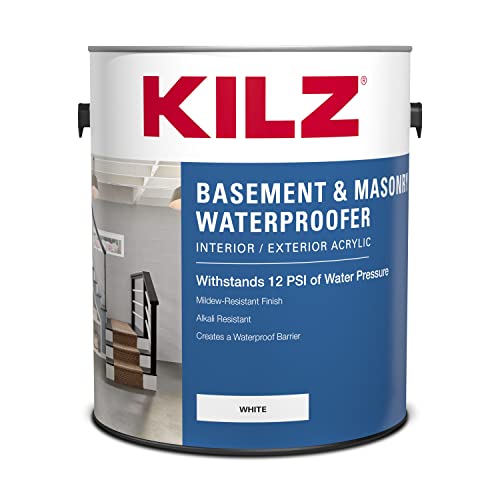
Brand: KILZ. Notable features include waterproofing protection with nanotechnology, interior and exterior versatility, and an alkali-resistant finish. Best for basements and exterior masonry where moisture infiltration is a concern. This paint is selected for environments prone to humidity or water exposure on concrete, brick, or masonry surfaces. A limitation is that it is not recommended for floors or walls with active water leaks without prior remediation.
GLAINTE Brick Transformation Paint
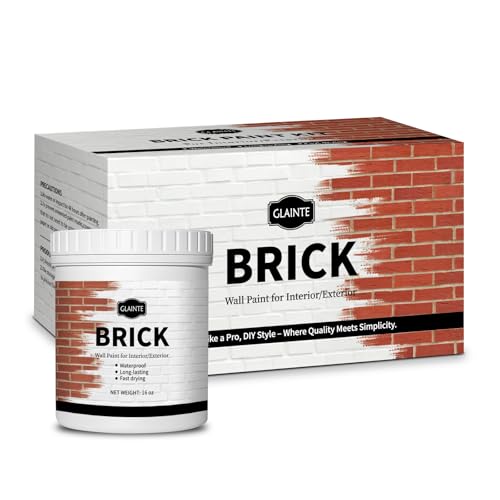
Brand: GLAINTE. A multifunctional white paint set designed for direct application on brick, concrete, wood, and more. It’s versatile for indoor and outdoor use with sun and waterproofing properties. The water-based formula reduces VOCs and odors, beneficial for enclosed spaces. It also provides adjustable opacity by dilution, enabling textures and patterns. Best for projects where quick, odor-minimized transformations are desired; the caveat is that it may not deliver heavy-duty insulation compared to dedicated insulation paints.
Hensire White Exterior Wall Paint for Concrete & Masonry

Brand: Generic. Marketed as top-selling waterproof exterior concrete paint, it emphasizes strong adhesion to concrete surfaces, resistance to peeling and moisture damage, and a broad color range in black, gray, and white. Best for outdoor brick and concrete facades where long-lasting color and weather resistance are priorities. A potential limitation is that outdoor projects may require multiple coats for full coverage and uniform finish.
Buying Guide
What should you consider before buying insulating paint for concrete walls?
- Area type: Indoor vs outdoor and ceilings vs walls determine the best formulation and durability needs.
- Moisture exposure: Basements and exteriors demand water resistance and alkali tolerance.
- Finish preference: Flat, satin, or high-build finishes impact appearance and maintenance.
- VOC and odor: Low-odor, low-VOC options are preferable for enclosed spaces or living areas.
- Ease of application: Direct-to-surface options save prep time but vary in coverage and texture control.
- Repair considerations: Some products are best for minor repairs, others for full coatings; prep steps differ.
How to compare products quickly
- Look for water resistance and vapor barrier claims for moisture-prone areas.
- Assess whether a product targets walls, ceilings, or both for your project scope.
- Check odor, dry time, and cleanup requirements to fit your schedule and space.
FAQ
- Q: Is insulating paint effective on concrete walls? A: It can reduce heat transfer modestly and enhance surface durability, especially when used in combination with proper insulation strategies.
- Q: Can I apply these paints directly over old coatings? A: Preparation varies by product; some allow direct-to-surface applications, others require primer or patching for best results.
- Q: Are these paints safe for indoor use around families? A: Many listed options emphasize non-toxicity and low odor, but reading the specific product data is recommended.
- Q: Which product is best for basements? A: A waterproofing or moisture-resistant formulation, such as the KILZ Basement and Masonry Paint, is typically well-suited for basements with high humidity.
- Q: Do these paints improve energy bills significantly? A: They can contribute to reduced heat transfer, but results depend on overall insulation and climate; they are one part of a broader thermal strategy.
- Q: Are there any safety precautions during application? A: Follow manufacturer guidelines, ensure proper ventilation, wear PPE as recommended, and avoid applying in high-humidity or rainy conditions when advised.