When removing paint, choose sandpaper that delivers controlled material removal, minimizes dust, and leaves a smooth base for priming. This guide highlights five reliable options suited for DIY homeowners, woodworking hobbyists, automotive touch-up projects, and professional renovators. Each product section explains who benefits most, why it’s a strong pick, and any practical limitation to consider. A quick buying table helps compare core strengths at a glance.
| Product | Best For | Why It Stands Out |
|---|---|---|
| Romeda 8-Pack Sanding Sponge | General refinishing, drywall and wood | Assorted grits, washable and reusable Blocks |
| YNZDRWA 8 Pack Sanding Sponge | Drywall, wood, metal furniture | Durable, suitable wet/dry use, versatile |
| 3M Wetordry Sandpaper (Assorted Grits) | Finish work and paint defect removal | Quality brand with wet/dry versatility |
| Pihemum 45 Pcs Sandpaper Assortment | Complete prep from shaping to polishing | Wide grit range, waterproof and durable |
| Afruxy Sanding Sponge 4-Pack | Fine finishing, delicate surfaces | Includes gloves, durable aluminum oxide blocks |
Romeda 8-Pack Sanding Sponge

Grits: 60/80/120/220; 8 blocks, 4 grits per pack. Colors differentiate grit sizes; materials are high-density sponge for flexibility and durability.
Best for: DIYers tackling drywall, wood projects, primer smoothing, and light metal polishing. The assortment supports multiple stages of paint removal with a single purchase.
Caution: Sponges are portable but may wear faster on aggressive material removal; choose coarser grits for initial pass and reserve fine grits for finishing.
YNZDRWA 8 Pack Sanding Sponge

Grits: 60/80/120/180/220; dual-use for wet and dry sanding with 8 blocks in 4 grits.
Best for: Professionals and DIYers handling drywall finishing, furniture refinishing, and light metal work. The kit’s wet-dry capability reduces dust and improves surface quality.
Caution: The set includes several grit steps; plan a progression path to avoid over-sanding delicate surfaces.
Pihemum 45 Pcs Sandpaper Assortment

Grits: 80/120/180/240/320/400/600/800/1000/1200/1500/2000/2500/3000/5000 (3 sheets each).
Best for: Finishing enthusiasts and automotive refinishing where a wide grit spectrum supports shaping through polishing. Waterproof construction aids longevity.
Caution: Large grit range means you should organize your workflow to avoid mixing grits and ensure consistent results.
3M Wetordry Sandpaper, Assorted Grits
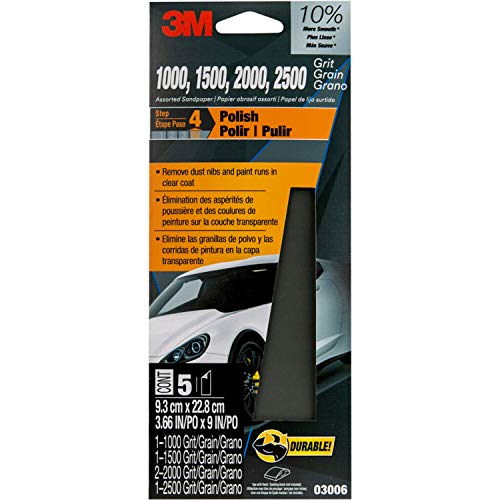
Grits: 1000/1500/2000/2500; sheets sized 3 2/3 in x 9 in; ideal for clear coat sanding and paint defect removal.
Best for: Finish work and paint defect repair where a smoother final surface is required, with the convenience of wet and dry use without changing products.
Caution: Higher grits are delicate; handle gently on soft coatings to avoid gouging thin layers.
24 Pcs Sanding Sponge Kit

Grits: 80/120/180/240/320/400/500-600/800-1000/1200-1500/2000/2500/3000; 24 pieces with durable, comfortable blocks and included gloves.
Best for: Automotive refinishing, furniture refinishing, and DIY projects requiring broad versatility and dust-control through wet sanding.
Caution: The kit’s many pieces may require organization to align the right grit with the job stage; avoid using coarser grits on finished surfaces.
S&F STEAD & FAST Sanding Sponge Set

Grits: 60/80/120/220; includes premium European foam with aluminum oxide abrasive; multipurpose for wood, paint, drywall, and metal work.
Best for: Hand sanding that requires robust blocks with reliable durability for tough jobs, such as stripping paint or final finishing on wood and metal.
Caution: Heavier grit blocks can wear quickly on hard coatings; pair with finer grits for final passes to avoid scratches.
3M Aluminum Oxide Sandpaper (Assorted Grits)

Grits: 100/150/220; 9 x 11 inches; multi-purpose for paint removal on wood, metal, and general sanding tasks.
Best for: Traditional wood and metal projects where consistent grit distribution and reliability matter, usable by hand or on a sander.
Caution: Larger sheets require proper backing or a sanding block to prevent hand fatigue and ensure even wear.
Buying Guide: Key Considerations for Paint-Removal Sanding
- Project type: Choose coarser grits (60–80) for rapid material removal and finer grits (120–220, up to 3000 for polishing) for finishing. Wet/dry compatibility helps with dust control and longer sheet life.
- Surface material: Woods with soft grain benefit from gentler grits first; hard woods and metal may require more aggressive initial grits. Use flexible sponge blocks for contoured surfaces to avoid gouges.
- Dust control: Wet sanding reduces dust and minimizes scratching. Kits offering washable blocks extend usable life and reduce waste.
- Durability and grip: Look for high-density foam or reinforced backing for comfortable, extended use. Durable abrasives resist tearing during heavy stock removal.
- Compatibility with tools: Some sheets are designed for hand sanding; others work with blocks or orbital sanders. Ensure the backing size matches your tool.
FAQ
- What grit should I start with for paint removal on wood?
Start with 60–80 grit for heavy stock removal, then move to 120–180, and finish with 220–320 for a smooth base before priming. - Is wet sanding necessary for paint removal?
Wet sanding reduces dust, cools the surface, and can extend the life of the abrasive. It’s particularly useful on delicate surfaces. - Can I use the same sanding sponge on drywall and wood?
It depends on grit; rough grits (60–80) can be used on drywall for texture removal, but finer grits are better for finishing on wood to avoid tearing. - Do sanding sponges wear out quickly?
Durability varies by material and grit. Higher-density sponges with aluminum oxide tend to last longer under typical home-use conditions. - Should I choose a multi-pack or single- grit sheet set?
Multi-packs provide versatility for a range of steps, reducing the need to buy separate grits for different projects.