Finding the right mocha mauve shade matters for projects that require warm neutrals with a soft, sophisticated tint. This article highlights five practical options across watercolor and acrylic formats, aimed at different buyers—from hobbyists to leather restorers. Each choice is evaluated for best-use scenarios, with clear pros and a potential limitation to consider.
| Product | Best For | Format |
|---|---|---|
| Winsor & Newton Cotman Watercolor Mauve | Watercolor painters seeking reliable Mauve in a student-grade line | Watercolor Tube |
| Grumbacher Academy Mauve | Students or beginners exploring transparent mauve washes | Watercolor Tube |
| Angelus Mauve Leather Paint (4 oz) | Leather restoration or customization projects | Acrylic Leather Paint |
| DecoArt Light Mocha | General craft and multi-surface projects | Acrylic Paint |
| FolkArt Coffee Latte | Multi-surface crafts needing a warm mocha tone | Multi-Surface Acrylic |
Note: Each product serves different material bases and project needs. The selections below emphasize practical application, color versatility, and easy sourcing for American shoppers.
Winsor & Newton Cotman Mauve Watercolor

Brand: Winsor & Newton. Features: Cotman line offers quality at a more approachable price, with permanent A-grade permanence and a color code of 398. Best for watercolor artists who want stable mauve with reliable lightfastness. The color can be used straight from the tube or mixed with water for varied transparency. A potential limitation is that it is a watercolor, so it’s not ideal for opaque, mixed-media applications requiring thick coverage.
Grumbacher Mauve Academy Watercolor

Brand: Grumbacher. Features: A transparent violet-purple with a modern organic pigment, designed for landscapes and atmospheric effects. Suitable for vibrant washes and mixed-media textures when combined with white. Best for artists seeking a luminous mauve with versatility. Limitation: transparency means it may require multiple layers to achieve deeper coverage on heavier papers or darker backgrounds.
Angelus Mauve Leather Paint (4 oz)

Brand: Angelus. Features: Water-based, non-toxic acrylic leather paint suitable for restoring or customizing leather items like boots, jackets, or purses. Best for long-lasting color on leather surfaces with flexible, durable film. Limitation: designed specifically for leather; not ideal for non-leather materials or rigid substrates without proper prep.
Angelus Mauve Leather Paint (1 oz)

Brand: Angelus. Features: Similar to the 4 oz product, this smaller bottle provides the same water-based, non-toxic formulation for leather projects. Best for smaller leather touch-ups or trials. Limitation: smaller quantity may require more frequent reordering for large projects.
FolkArt Multi-Surface Coffee Latte
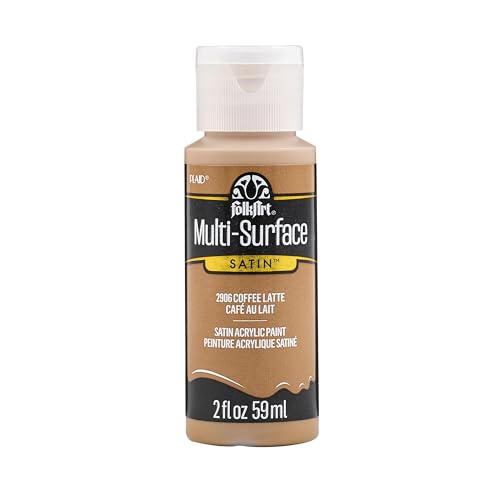
Brand: FolkArt. Features: A vibrant 2 oz multi-surface acrylic with a satin finish, suitable for wood, terra cotta, canvas, glass, fabric, and more. Best for indoor and outdoor crafts that benefit from a warm mocha tone with a satin sheen. Limitation: as a multi-surface acrylic, color performance can vary by substrate and sealer used.
DecoArt Americana Light Mocha

Brand: DecoArt. Features: Non-toxic, highly pigmented with excellent coverage in one coat. Best for quick projects and reliable uniform color on various surfaces. Limitation: the description notes high pigment load, which can require careful layering to avoid streaks on porous surfaces.
Winsor & Newton Professional Mauve Watercolor

Brand: Winsor & Newton. Features: The Professional line offers a wide pigment palette with the highest permanence and semi-transparent opacity. Best for serious watercolorists who want a robust mauve color with strong permanence. Limitation: may be pricier than student-grade options and not ideal for absolute beginners on a tight budget.
Buying Guide: Mocha Mauve Paint Colors
- Material compatibility: Choose watercolor paints for paper-only projects; acrylics for mixed media or non-paper surfaces; leather paints for leather items. Each base handles color differently and requires suitable preparation and sealing.
- Transparency vs. coverage: Watercolors tend to be transparent; acrylics and leather paints offer more opaque coverage. If you need layers or glazes, consider transparent options like Grumbacher Academy or Winsor & Newton Cotman Mauve.
- Finish preferences: Satin or matte finishes (FolkArt Multi-Surface, DecoArt) are common for decorative projects, while watercolor finishes depend on paper and wash technique.
- Durability and permanence: Professional and some Academy lines emphasize permanence; for leather, durability depends on proper curing and surface preparation.
- Project scale: Large leather projects may benefit from the 4 oz Angelus paints; small tests or detail work can use 1 oz Angelus bottles or watercolor tubes.
FAQ
- What is the main difference between watercolor and acrylic mocha mauve paints?
Watercolor is translucent and relies on paper texture; acrylics dry opaque and form a solid film on most substrates. - Which product is best for beginners?
Grumbacher Academy Mauve offers beginner-friendly behavior in washes and color mixing. - Can I use mocha mauve on leather?
Yes, Angelus leather paints are designed for leather surfaces and provide durable color with flexible film. - Is there a single best mauve pigment for all projects?
No. Choose based on substrate, finish, and whether you need transparency or solid coverage. - Should I seal acrylic finishes after painting?
Sealing is project-dependent; many FolkArt and DecoArt acrylics benefit from a compatible sealer to protect color. - Can I mix these mauve colors to create a custom shade?
Yes. Many artists blend watercolor and acrylic colors on their palettes; test swatches first to ensure color stability.