Answering the common search intent, this guide highlights top vacuum-assisted sanding systems for drywall, ceilings, and plaster. These selections are best for contractors, DIYers tackling high-ceiling rooms, and those prioritizing dust control and clean workspaces. The list combines built-in vacuum models, compatible dust-free hand tools, and multi-surface sanders to cover different project scopes. A quick summary table follows to help you compare at a glance.
Buying Summary Table
| Product | Best For | Key Benefit | Limitations |
|---|---|---|---|
| Protmex Drywall Sander | Ceiling work, high reach | Built-in vacuum, adjustable pole | Higher price; larger unit |
| Hyde Dust-Free Hand Sander | Small areas, furniture-safe sanding | Attachable to any vacuum, easy dust control | Manual grip; limited reach |
| SKIL Detail Sander | Edges and corners | Micro-filter dust box, 3 attachments | Smaller dust collection footprint |
| BOSCH ROS20VSC | General purpose, versatile surfaces | Variable speed, reliable attachment system | Basic dust system; needs vacuum |
| Gioventù Dustless Drywall Sander | Large surface areas | Auto dust collection, long cord, LED light | Complex setup |
Protmex Drywall Sander With Vacuum
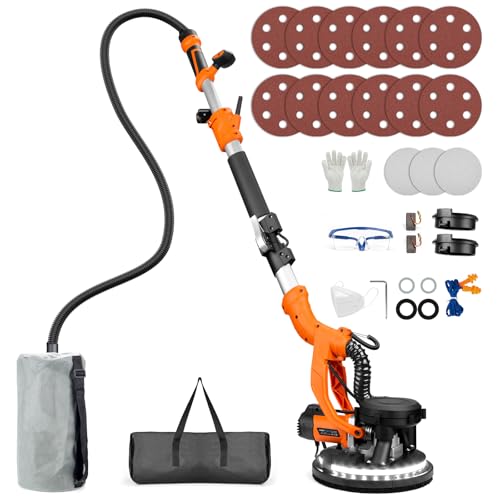
The Protmex model uses a 1000W copper motor and offers 6 adjustable speeds from 800 to 2200 RPM. Best for pro-grade sanding on drywall, painted surfaces, ceilings, and cement walls. It integrates a built-in vacuum with a 6-hole sanding disc to maximize dust capture, supporting up to 98.5% dust reduction in typical scenarios. The extendable pole adjusts from 4.9 to 6.2 feet, helping reach high ceilings without ladders. This makes it ideal for homeowners tackling popcorn ceilings or contractors needing consistent dust control on larger rooms.
Who it’s best for: Professionals and serious DIYers who value strong dust control, variable speeds for different materials, and a long reach. Choose this if you need a single tool for ceilings and high walls with reliable suction. Caution: Heavier and bulkier than compact handheld sanders, so it may be less maneuverable in tight corners.
Hyde Tools 09165 Dust-Free Drywall Vacuum Hand Sander

This hand sander is designed to attach to a wet/dry vacuum for dust-free operation across drywall projects. It protects furniture, floors, and lungs by keeping dust contained while you sand. The EasyClamp system lets you replace sanding screens quickly. It’s best for small areas, trim work, and projects where you need precise control without a full vacuum-equipped sander. The main limitation is its reach and weight distribution, making it less suitable for large wall areas or ceilings.
Who it’s best for: DIYers or professionals performing detail work in tight spaces. Better for low-murniture projects and spots where mobility matters. Limit: Not ideal for broad ceiling sanding without a dedicated extension setup.
SKIL Corded Multi-Function Detail Sander
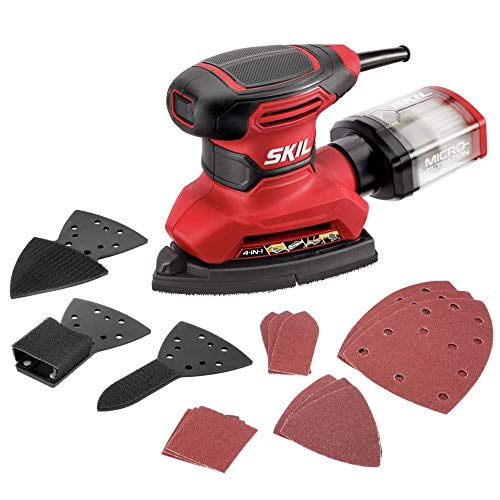
This 4-in-1 detail sander includes three attachments for edges, corners, and contours. It operates at 13,500 orbits per minute with a 1.2-amp motor. Its micro-filtration system and 1-1/4″ dust port allow for flexible dust-control when paired with a vacuum. Best for precise finish work around outlets, window wells, and trim. A potential drawback is that its dust collection capacity is smaller than larger vacuums or integrated systems, so keep a nearby vacuum handy for extended sessions.
Who it’s best for: Finish carpenters and hobbyists focusing on detail work. Choose this if you need versatile attachments and crisp control. Avoid if you require heavy-duty, all-surface dust collection in one unit.
BOSCH ROS20VSC Palm Sander With Vacuum

The BOSCH ROS20VSC offers a variable speed dial for matching sanding to the workpiece. It uses a hook-and-loop disc attachment system, ensuring easy pad changes and secure disc grip. Its dust management relies on an external vacuum connection to maintain a cleaner work area. This sander is best for general-purpose sanding and frequent transitions between surfaces. A limitation is that it lacks an integrated vacuum system, so you’ll need a compatible vacuum setup to maximize dust control.
Who it’s best for: General contractors and DIYers who need a reliable, flexible sander that works well with standard vacuums. Better for multi-surface projects where quick disc changes are beneficial. Avoid if you require built-in dust collection without extra gear.
Goldblatt Dust Free Hand Sander
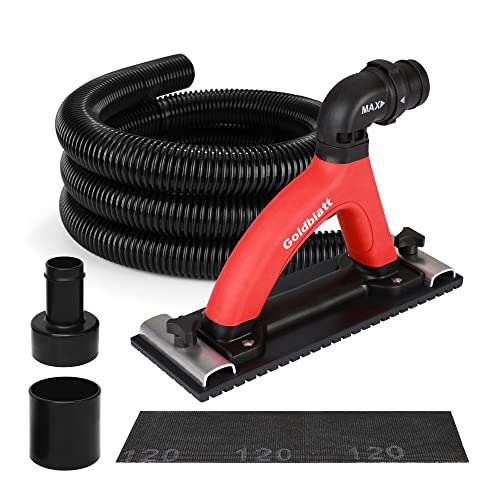
The Goldblatt hand sander emphasizes dust reduction with a dedicated 6.5 ft hose and integrated dust flow into a vacuum system. It includes a 360° pivoting elbow for ease in vertical surfaces and a compatible hose adapter for common vacuums. It’s best for small to medium drywall patches and finishing tasks where movement around furniture matters. The limitation is that being a hand tool, it’s less suited for large surface areas compared with powered sanders.
Who it’s best for: Small- to mid-area projects and users prioritizing dust control with a simple setup. Choose this for close-quarters sanding where a compact tool is advantageous. Caution: Requires a vacuum, and performance depends on matching the hose to your system.
Gioventù Dustless Drywall Sander With Auto Vacuum

This Gioventù model features an integrated auto dust collection system with a long 26 ft power cord for large spaces. It includes a 780W motor and a seven-speed range (900-1800 RPM), along with foldable ergonomics and an adjustable aluminum extension rod. An LED light helps illuminate work areas, especially in dim rooms. It’s best for extensive drywall floors and ceilings where consistent dust control is critical. A caveat is the more complex setup compared to simpler handheld units.
Who it’s best for: Pros and ambitious DIYers tackling large drywall jobs. Better for open spaces and ceiling work with brightness aid. Limit: Heavier and more involved setup than compact sanders.
Buying Guide: How To Pick A Vacuum Sanding System
- Dust control needs: If dust is a major concern, favor tools with built-in vacuums or strong external vacuum compatibility.
- Reach and ergonomics: For ceilings and high walls, choose extendable poles or foldable designs to minimize ladders and improve comfort.
- Power and speed range: For textured surfaces like popcorn ceilings, higher RPM and stable power help achieve even finishes.
- Tool versatility: A 4-in-1 detail sander or a multi-surface model can cover edges, corners, and large areas, reducing tool swaps.
- Dust collection compatibility: Check hose diameter and attachment systems to ensure compatibility with your vacuum setup.
- Weight and portability: Lightweight models excel in small rooms; heavier units may offer steadier control for big projects.
- Ease of maintenance: Quick-release discs, replaceable filters, and accessible dust bags save time on job sites.
Frequently Asked Questions
- Do I need a built-in vacuum or can I use an external vacuum? External vacuums work well with most power sanders, but built-in systems simplify setup and reduce dust escape.
- What RPM range is best for drywall? A mid-to-high range (around 900–1800 RPM) balances aggression and control on drywall surfaces.
- Is a long power cord necessary? For large rooms and ceilings, a long cord (26 ft or more) minimizes interruptions and power source changes.
- Can I use regular sandpaper on vacuum sanders? Yes, most models use standard hook-and-loop discs; ensure the grit matches your task (80–120 for initial leveling, 180–240 for finishing).
- What’s the best approach to popcorn ceilings? Start with higher RPM and steady passes, maintaining consistent pressure while letting the vacuum capture lofted debris.
- Are cordless options available? Cordless vacuum-sand systems exist but typically have shorter runtimes; choose them if you need portability above continuous operation.