When choosing paint that helps insulate walls, your goal is to reduce energy loss, limit odors, and simplify interior projects. This guide highlights five interior paints and coatings that either contribute to better thermal performance or improve comfort with low odor and quick-drying formulas. Best for renters, DIYers, and remodelers seeking practical touch-up and finishing options, these picks balance coverage, ease of use, and availability. The following sections explain who should consider each product and why it was selected, along with practical cautions and buying guidance.
| Product | Best For | Key Benefit |
|---|---|---|
| ECMOOMCE Wall Paint, 17.64oz | Everyday wall touch-ups | High coverage with low odor |
| Zinsser PERMA-WHITE Mold & Mildew | Moist environments | Self-priming; mildew resistance |
| DWIL White Paint for Wall 32 Oz | General interior walls | Low odor; fast drying; no primer needed |
| Meuvcol White Paint Touch-Up Kit | Small repairs with minimal mess | All-in-one kit; non-toxic |
| roVa Shield Aerogel Insulation Coating | Thermal insulation coating | Fast-drying, energy-saving insulation |
ECMOOMCE Wall Paint: High Coverage, Low Odor

The ECMOOMCE paint is designed for interior walls and ceilings, offering high coverage to conceal scratches and stains quickly. It uses a water-based formula with low odor, making it a practical choice for homes with sensitivities or spaces frequently used by families. Best for: quick touch-ups and fresh looks in living rooms, bedrooms, and rental properties where odor control matters. Limitation: it focuses on coverage and finish rather than added insulation performance.
Zinsser PERMA-WHITE Mold & Mildew Proof

This interior paint is self-priming and designed to resist mold and mildew on the film coating for up to five years. It is best for spaces with higher humidity, such as bathrooms, basements, or kitchens, where mildew resistance adds long-term value. Best for: homes in humid climates or rooms where surface cleanliness is crucial. Caution: while mildew resistance is strong, surface preparation still affects performance on very damaged walls.
DWIL White Paint For Wall
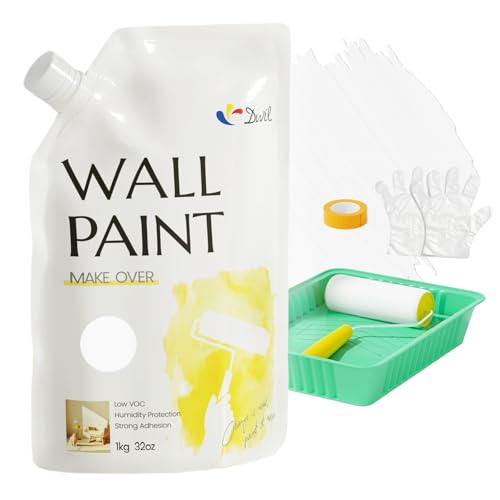
DWIL’s white wall paint emphasizes adhesion, durability, and a low odor profile. It claims no priming is needed, which can save time on interior projects. Best for: interiors requiring a durable finish on walls and ceilings with minimal odor impact. Limitation: as a broad interior paint, it may not offer specialized insulation properties beyond improved surface protection and finish quality.
Meuvcol Wall Touch-Up Kit

Meuvcol provides an all-in-one touch-up kit with white interior paint, a roller, and brushes. It is non-toxic and family-safe, making it well-suited for homes with children or pets. Best for: quick repairs and clean refreshes in high-traffic areas without creating smells or requiring extensive setup. Caution: the kit is designed for small to moderate touch-ups rather than large painting projects.
roVa Shield Aerogel Insulation Coating

roVa Shield is an insulation coating featuring aerogel-based technology. It is designed to improve energy efficiency by reducing thermal transfer through walls. It offers a fast-drying, sprayable finish suitable for applications where insulation benefits are a priority. Best for: homeowners or builders aiming to add a thin insulation layer to interior surfaces without major renovation. Limitation: it is a coating rather than a standard paint, so application method and surface compatibility should be reviewed carefully.
Buying Guide: Key Purchase Considerations
- Performance goals: If insulation is the main objective, consider coatings with insulation properties like aerogel-based products. For cosmetic updates, prioritize high-coverage, low-odor paints.
- Odor and VOC levels: Choose low-odor or water-based formulas for bedrooms, nurseries, and rental units to minimize disruption and improve indoor air quality.
- Surface compatibility: Check whether walls require priming or if a self-priming formula is sufficient for your substrate and condition.
- Maintenance and durability: For high-traffic spaces, look for scratch- and scuff-resistant finishes with easy washability and long-lasting color.
- Moisture resistance: In humid areas, prioritize mildew-resistant or moisture-resilient coatings to extend wall life and maintain aesthetics.
- Application practicality: Kits with integrated rollers or touch-up systems simplify smaller projects and reduce setup time, especially for renters.
- Size and coverage: Calculate square footage to match the product’s coverage per can or bottle. Larger rooms benefit from higher-coverage options to minimize repeat coats.
FAQ for Buyers
- What is the best paint for insulation?
Answer: Coatings featuring aerogel or advanced insulating properties, like roVa Shield Aerogel Insulation Coating, offer enhanced thermal performance alongside finishing benefits. - Do interior paints really insulate walls?
Answer: Standard interior paints provide limited insulation; some products are designed to add a thin insulating layer or improve thermal performance when used as coatings, while most insulation gains come from dedicated insulation products or layered wall assemblies. - Is low-odor paint suitable for bedrooms?
Answer: Yes. Low-odor or low-VOC formulas minimize fumes, making them suitable for bedrooms, nurseries, and spaces with sensitive occupants. - Should I prime before painting?
Answer: It depends on the product and substrate. Some self-priming paints eliminate the need for a separate primer, while others may require priming for optimal adhesion and coverage. - What is best for mildew-prone areas?
Answer: Mold and mildew resistant interior paints, such as Zinsser PERMA-WHITE, help inhibit mildew growth on the paint film in moist spaces. - Can I use touch-up kits for large areas?
Answer: Touch-up kits are ideal for small repairs and spot refreshment; for large walls, traditional cans of paint or larger rollers may be more efficient.