Looking for high-impact epoxy color options that mix easily and stay vibrant? This guide highlights five top epoxy resin color pigments that are widely used for resin jewelry, crafts, coasters, and art pieces. Each pick is best for different styles and skill levels, from bold, opaque finishes to translucent, pearlescent looks. Use these to achieve ocean blues, deep blacks, shimmering purples, or bright accents without fuss. Below you’ll find a quick buying table, then focused product sections to help you decide which pigment is right for you.
| Product | Brand | Best For | Notes |
|---|---|---|---|
| Epoxy Resin Pigment – 16 Colors | SigWong | Vibrant, varied color sets | Great for beginners to mix and layer |
| LET’S RESIN 8-Color Resin Pigment Paste | LET’S RESIN | Bold, concentrated pastes | Expands into translucent or opaque |
| CHANGTIKEJI Mica Powder 24 Colors | CHANGTIKEJI | Shimmering, natural mica pigments | Excellent for pearlescent effects |
| MEYSPRING Charcoal Black Mica Powder | MEYSPRING | Deep black with depth | Ideal for river tables and dark pours |
| Rolio Premium Mica Powder Pearlescent | Rolio | Bright, versatile pearlescent colors | Cosmetic-grade safe for many uses |
Epoxy Resin Pigment – 16 Colors by SigWong

Best for: Beginners and hobbyists who want a broad color range in one kit. The set includes 16 translucent colors, including fluorescent, primary, and metallic-like tones. Small drops go a long way because the dyes are highly concentrated. The kit also includes three gold foil flakes for added texture. Use to create jewelry pieces, decorative accents, or layered resin art. A caution: the pigments are liquid and should be stored securely to prevent leaks.
Why selected: This comprehensive color collection covers a wide spectrum, simplifying color matching and experimentation. The pigments mix well with resin, enabling both translucent tints and opaque layers when combined with white pigment. It’s suitable for various DIY projects, from jewelry to decor items, and the included foil flakes offer extra design options.
Limitations: Some colors are highly concentrated; start with tiny drops and test color strength before large pours. The package is designed for color versatility, not for specific professional certifications.
LET’S RESIN 8-Color Resin Pigment Paste
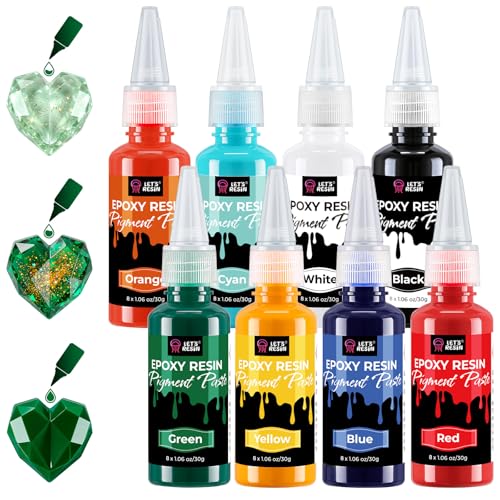
Best for: Crafters seeking strong, concentrated pastes that color resin quickly. The set includes eight vibrant colors, all highly concentrated for minimal use. It’s ideal for creating ocean waves, marbles, and deep layers in river tables. The packaging notes that contents are filled by weight (1.06 oz per bottle) and that the color is highly efficient, which helps with budgeting for larger projects.
Why selected: The paste format makes dosing precise and repeatable. It supports both translucent and opaque outcomes by adjusting the amount used. This makes it a strong all-around option for varied resin art techniques, without requiring extra diluents.
Limitations: Some users may prefer liquid dyes for easier mixing in very large pours; colors are best tested in small test pours first to gauge opacity and effect.
CHANGTIKEJI Mica Powder, 24 Colors

Best for: Crafters who want a natural mica sparkle and a wide color range for epoxy resin, soap making, candles, and cosmetics uses. The mica powder is natural, non-toxic, and high-density, which means a small amount delivers lasting color. It provides a shiny finish that remains distinct in resin projects and is also suitable for cosmetic applications like lip gloss and nail polish.
Why selected: The 24-color mix offers a broad palette with strong pigment visibility and a lustrous finish. It’s versatile across many projects beyond resin, including nails, candles, and bath products. This makes it an economical choice for multi-use creativity.
Caution: Natural mica powders can leave some surface residue on external packaging; wipe surfaces during mixing to keep the workspace clean.
MEYSPRING Charcoal Black Mica Powder

Best for: Projects requiring deep, rich black with depth and movement, such as river tables and dark-toned art pieces. The pigment size (10-60 microns) helps it blend well with resin crystal clear or UV resin, creating subtle cell patterns and a glossy finish.
Why selected: This charcoal black pigment delivers a dramatic, sophisticated look that enhances contrast in layered resin art. Its versatility with deep pours makes it a preferred choice for professional-looking dark effects without relying on opaque paints.
Limitation: Using too much black pigment can overwhelm other colors; start with a small amount and build gradually for balanced results.
Rolio Premium Mica Powder Pearlescent Set
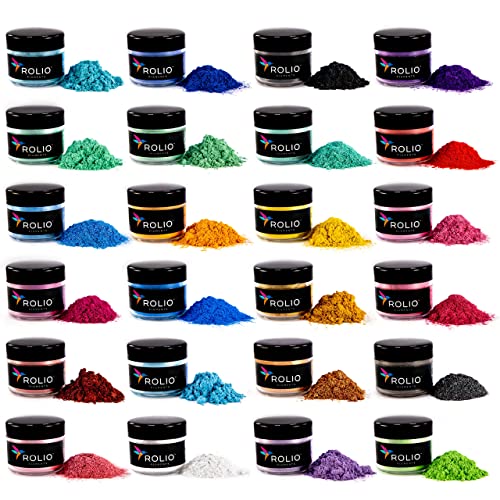
Best for: Resin artists seeking pearlescent, vibrant color options with a cosmetic-grade safety profile. The set offers multiple bright, reflective colors suitable for jewelry, crafts, and decorative items.
Why selected: Rolio’s mica powders are designed for easy use with epoxy resin, forming strong pigments with a shimmering finish. The color range supports creative layering and mixed-metal looks, useful for unique resin jewelry and decor pieces.
Limitation: Powder is loose and may leave some excess on the jar exterior; work with a clean, contained setup to minimize dust in your workspace.
Buying Guide: Key Considerations For Epoxy Resin Color Pigments
What should you consider when choosing epoxy resin pigments?
- Concentration: Highly concentrated pigments require fewer drops, reducing waste and color drift. Pastes are easy to measure, while liquids offer rapid dispersion.
- Finish: Decide between translucent, opaque, or pearlescent effects. White pigment or mixing with white can raise opacity, while colored mica powders yield shimmer.
- Compatibility: Ensure pigments are suitable for epoxy resin and any additives like UV resin or clear coats you plan to use.
- Intended effect: For ocean scenes, deep blues and greens with translucent layers work well. For jewelry, consider skin-safe, cosmetic-grade pigments where applicable.
- Application: Some pigments are better for large pours (coasters, river tables) while others excel in small, detailed pieces (jewelry, inlays).
Frequently Asked Questions
How much pigment should I use per pour? Start with a tiny amount and add gradually until you reach the desired intensity. Larger pours may require more pigment overall, but test pours are recommended.
Are mica powders safe for skin and cosmetics? Many mica powders are cosmetic-grade and safe for makeup or lip products, but check product labeling to confirm intended use and safety testing.
Can pigments be mixed to create custom colors? Yes. Start with small test pours to verify color accuracy and opacity before committing to a full project.
What is the difference between translucent and opaque resin colors? Translucent dyes tint the resin for a see-through effect, while opaque pigments fully cover the resin to hide the base color or substrate.
Do pigments affect curing or clarity? Some pigments can slightly alter clarity or curing behavior; always perform a small test pour to verify outcomes before large projects.
Additional Tips
- Label and organize pigments by color family to speed up color matching during projects.
- Keep pigments sealed when not in use to prevent moisture ingress or clumping.
- Use protective gloves and a well-ventilated workspace when handling powders and liquids.