Answering the need for durable, versatile sandpaper, this guide spotlights silicon carbide finishing papers that perform well across wet and dry use. The selections are ideal for woodworkers, metalworkers, automotive hobbyists, and DIY enthusiasts seeking smooth finishes, efficient material removal, and reliable backing. The top picks cover a range of grits from coarse to ultra-fine, helping you prep surfaces, strip coatings, and polish to a final finish. Below is a quick summary of the best options to consider.
| Product | Grit Range | Best For |
|---|---|---|
| BMOTL Sandpaper Sheets 9×11 (80-400) | 80, 120, 180, 220, 320, 400 | Coarse to intermediate material removal; versatile for wood, metal, and crafting |
| MAXAMN 180 Grit Sandpaper | 180 | Fine smoothing on wood and metal; suitable for prepping surfaces |
| LotFancy 240 Grit Sandpaper | 240 | Medium smoothing; good for prep and light finishing |
| BMOTL 220 Grit Sandpaper Sheets | 220 | Finer smoothing and feather-edging of primer |
| LotFancy 400 Grit Sandpaper | 400 | Final finishing and light polishing |
BMOTL 9×11 Assorted 80-400 Grit Sandpaper

Best for a broad starter set, this BMOTL assortment includes six grits (80, 120, 180, 220, 320, 400), two sheets of each. The silicon carbide abrasive delivers fast material removal in dry use and reduced clogging when used with water. The sheets fit common sanding blocks and tools, making this option ideal for wood, metal, automotive detailing, and DIY projects. Use this set when you want versatility without switching packs frequently.
Who this is best for: Beginners and DIYers who need a complete range to attack coatings, smooth rough surfaces, and prep primed areas before finishing.
Caution: The multi-grit set is optimized for general tasks; for highly delicate finishes, start with higher grits to avoid gouging.
MAXAMN 180 Grit Sandpaper, 10 Sheets
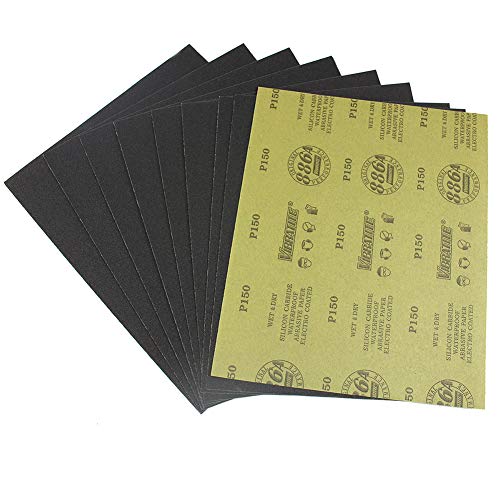
This 180-grit pack is a practical choice for finer smoothing and surface preparation. Silicon carbide provides sharp, consistent cutting, while a durable backing helps resist tearing during curved-surface sanding. The sheets’ wet/dry versatility supports both initial leveling and light finishing, especially for wood, metal, and automotive prep tasks.
Who this is best for: Users who need a mid-range grit for precise surface leveling without switching to ultra-fine grits too early.
Caution: Limited grit range means you may want to pair with coarser and finer sheets for full project workflow.
LotFancy 240 Grit Sandpaper, 30Pcs

LotFancy’s 240-grit pack provides a reliable mid-range option for smoothing surfaces and removing light blemishes. The silicone carbide abrasive resists tearing when placed on flexible backings, and the waterproof paper enables wet sanding to prevent heat buildup and clogging. This pack is well-suited for automotive refinishing prep and furniture finishing.
Who this is best for: Crafters and professionals who need consistent, middle-ground grit for finishing steps and intermediate smoothing.
Caution: While versatile, 240 grit is not ideal for heavy coating removal on very rough surfaces.
BMOTL 220 Grit Sandpaper Sheets

This 220-grit option offers finer smoothing and primer feather-ing for a flawless base before finishing. The dry/wet performance helps manage heat and accumulation of debris during surface preparation on wood and metal. The sheet size and flexibility support curved surfaces and tight spaces.
Who this is best for: Finishing specialists and hobbyists who need a refined abrasive for priming prep and minor blemish removal.
Caution: Avoid using 220 grit as the sole step on heavily soiled or heavily coated surfaces; pair with coarser grits for initial work.
LotFancy 400 Grit Sandpaper

The 400-grit LotFancy sheet is designed for final finishing and light polishing. Silicon carbide takes on a fine scratch pattern suitable for smooth surfaces and ready-to-paint substrates. The waterproof backing supports wet sanding to manage heat and dust and to achieve a polished look on wood, metal, and composite materials.
Who this is best for: Professionals and hobbyists finalizing projects who demand a high-quality, ultra-fine finish.
Caution: 400 grit does not remove material quickly; use earlier grits first for substantial shaping or coating removal.
Buying Guide: Silicon Carbide Finishing Paper Essentials
- What grit range do I need? Choose a progression: coarse (80–120) for heavy material removal, mid-range (180–240) for smoothing, and fine to ultra-fine (320–2500) for finishing and polishing.
- Wet vs. dry use? Wet sanding reduces heat and clogs, extends sheet life, and often yields a smoother finish. Dry sanding is faster for initial material removal.
- Backing and flexibility? Durable paper backing (kraft or waterproof) improves tear resistance and bendability over curves. Flexible backing is safer on contours.
- Backing size and compatibility? Check sheet size and whether you can cut to fit your sanding block or machine. 9×11 inches fits common tools; many sets are easily cut to 1/4, 1/3, or 1/2 sheets.
- Material and performance? Silicon carbide is a hard, sharp abrasive ideal for metal, wood, and certain plastics. It holds a sharp edge during cutting, with good clog resistance when used with water.
- Durability and backing wear? Resin-bonded backings resist tearing and ensure the grains stay attached during extended use, especially on curved surfaces.
Frequently Asked Questions
- What is silicon carbide sandpaper best for? It provides fast cutting, good durability, and works well for wood, metal, and automotive prep, especially when used with water.
- Should I start with a coarse grit or finer grit? Start coarse for heavy material removal, then progress to finer grits for smoothing and finishing.
- Can I use wet sanding on metal surfaces? Yes, wet sanding helps reduce heat and clogging, delivering a smoother finish on metal.
- Is a larger grit range better? A diverse grit range is beneficial for complete projects, enabling a full progression from rough to finish. A focused set works if you know the project scope.
- How do I prevent clogging during wet sanding? Use plenty of water and avoid sanding soft coatings that cause rapid loading; switch to finer grits for finishing stages.
- What should I look for in a sanding sheet? Look for durable backing, even grit distribution, flexibility for curved surfaces, and compatibility with wet and dry use.