If you’re looking for a reliable roll-on primer to protect bare or previously rusted metal, these options offer strong adhesion, rust inhibition, and durable finishes. This guide highlights primers suited to automotive frames, machinery, and outdoor metalwork. The top picks cover different needs: heavy rust coverage, epoxy-based protection, spray alternatives, and easy-to-apply brush-on formulas. Each product is explained with who it’s best for, plus a clear note on any limitations to help you decide quickly.
| Product | Best For | Key Benefit |
|---|---|---|
| Rust-Oleum Professional Gray Rusty Metal Primer (1 gal) | Heavy-rust coverage on large metal projects | Flat finish with high protection |
| LISRUX Rust Converter & Metal Primer | Preventing rust on diverse metal surfaces | Rust conversion and sealing properties |
| Optiflow Epoxy Primer Starter Kit (Gray) | Small automotive frames and panels | Roll-on epoxy primer in kit form |
| Rust-Oleum Stops Rust Rusty Metal Primer (Brush, Brown) | Heavily rusted metal surfaces | Oil-based formula with strong rust prevention |
| Rust-Oleum Clean Metal Primer Spray (White) | General metal priming for various surfaces | Fast-drying, versatile primer |
Rust-Oleum Professional Gray Rusty Metal Primer, 1 Gal

Best for large areas with significant rust coverage. This 1-gallon gray primer is suited for heavy-duty projects like equipment frames or automotive parts needing robust rust inhibition. The oil-based formulation adheres well to rough surfaces and provides a durable base coat for top coats. A caveat is longer dry times in damp conditions, so plan accordingly for exterior work.
LISRUX Rust Converter & Metal Primer

Best for users seeking rust prevention and conversion in one step. This one-component, water-based coating seals out water and air, reducing oxidation. It’s suitable for automotive, machinery, marine, and outdoor metal. It tolerates high heat, up to 350°F, making it a solid choice for engine bays or hot-work areas. It may require compatible top coats for gloss or color finish.
Optiflow Epoxy Primer Starter Kit (Gray) – Eastwood
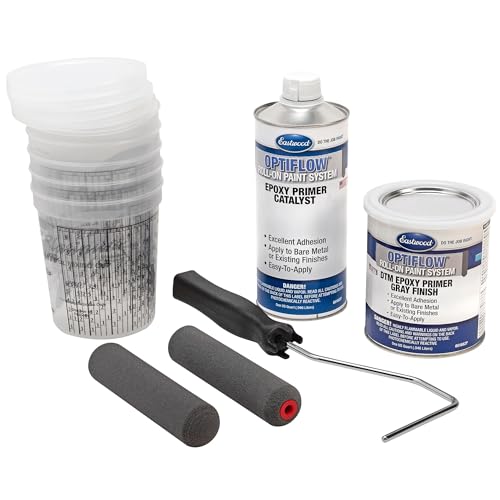
Best for DIY automotive projects requiring a durable epoxy finish. The kit includes gray epoxy primer and activator, plus small rollers and cups, producing about 2 quarts of roll-on primer. It’s designed to bond well to bare steel, aluminum, and other substrates. Choose this if you want a complete, roll-on epoxy solution in one package, but be mindful of mixing steps and cure times.
Rust-Oleum Stops Rust Rusty Metal Primer Brush Paint (1 Quart, Brown)
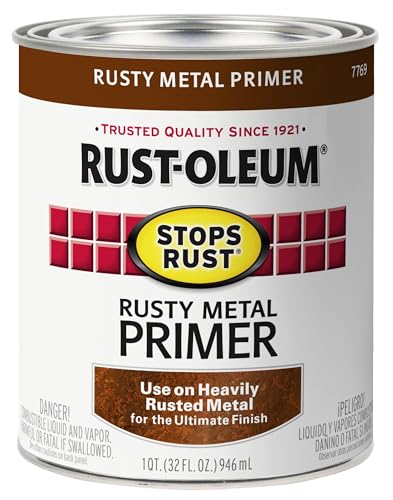
Best for heavily rusted surfaces where brushing is preferred. This oil-based primer emphasizes rust inhibition and a durable finish. It dries to the touch in a few hours and covers a wide area per can. A limitation is the brush application might be slower for large projects compared with spray or roller methods.
Rust-Oleum Stops Rust Clean Metal Primer Spray (12 oz, White)

Best for rapid priming of various surfaces, including metal, wood, and masonry. The oil-based formula provides rust protection with quick dry times—about 15 minutes to touch. Suitable for small to medium areas; larger rusted sections may require multiple cans or alternative application methods.
Optiflow Epoxy Primer Starter Kit (Black) – Eastwood

Best for projects needing a dark-functional epoxy base. The kit delivers a roll-on black epoxy primer that works on bare steel, aluminum, fiberglass, or over existing finishes. It’s chosen for small automotive refinishing tasks, with the same caveat of proper mixing and cure times as Gray variant.
Buying Guide: Key Considerations For Metal Primers
- Project scope: For large rusted areas, primer with strong corrosion resistance and higher coverage is preferred. Smaller parts benefit from spray or brush formats.
- Surface compatibility: Bare steel, aluminum, or existing coatings may require specific primers for best adhesion. Epoxy primers provide tougher bases for top coats.
- Drying and curing: Oil-based primers often require longer drying times; consider temperature and humidity for exterior use. Epoxy systems may need activators and longer cure times.
- Rust prevention vs. rust conversion: If removal isn’t complete, rust-converter products can treat rust in place by forming an inert layer.
- Top coat compatibility: Ensure the primer is compatible with your intended top coat (oil-based, latex, polyurethane, etc.).
- Application method: Roll-on, spray, and brush formats each have strengths. Roll-on epoxy primers provide uniform thickness for panels; brushes suit tight corners or rugged textures.
FAQ
- What primer should I use for heavily rusted metal? Answer: A rust-inhibiting primer formulated for heavy rust, such as Rust-Oleum Stops Rust Rusty Metal Primer, is designed for heavily rusted surfaces and offers durable protection.
- Do epoxy primers require a hardener? Answer: Yes, epoxy primers in starter kits typically require an activator or hardener as part of the curing process.
- Can I use a standard metal primer on outdoor metal? Answer: Yes, but select a primer rated for exterior use and weather resistance to ensure longer protection.
- Is rust converter as effective as removing rust? Answer: Rust converters stop rust progression and convert it to a stable layer, but for severely damaged metal, mechanical removal may still be needed.
- How long does drying time take? Answer: Dry times vary by product; oil-based primers often dry within a few hours, while epoxy primers may require longer curing before top coating.
- Can I paint over a primer that’s not fully dry? Answer: It’s best to wait until the primer is fully dry to prevent trapping solvents or compromising adhesion.