Whether you’re refinishing a vintage dresser, smoothing a chair rail, or preparing a tabletop for a new finish, a palm sander offers precise control and dust-conscious performance. This guide highlights five reliable palm/detail sanders that are well-suited for furniture projects. Each model is described with who it’s best for, key strengths, and practical cautions to help you choose wisely.
Overview: Quick reference to the top five picks
| Product | Best For | Why It Stands Out |
|---|---|---|
| WEN 6301 Electric Detailing Palm Sander | Small, precise work, beginners | Compact pad and angled tip for accuracy; light and affordable |
| SKIL SR232301 Corded Detail Sander | Versatility, multiple surfaces | 4-in-1 design with extra attachments; solid dust management |
| HYCHIKA Detail Sander | Tight spaces, finishing | Compact, quiet, includes multiple grits; good dust control |
| DOVAMAN Detail Sander | Lightweight, tight spaces | Copper motor, two dust collection options, low vibration |
| Prostormer Detail Sander | Versatile material handling | Multi-grit, quick-change, efficient dust collection |
WEN 6301 Electric Detailing Palm Sander

The WEN 6301 is designed for precision work on furniture with a 3.75 x 5.5 inch pad and an angled tip. It operates on a 1-amp motor delivering up to 13,500 OPM, suitable for light refinishing, detail sanding, and edge work. The sander weighs about two pounds, which helps reduce fatigue during extended sessions. Best for: hobbyists or beginners tackling small furniture pieces where accuracy matters. Caution: The one-amp motor may struggle on heavy, thick finishes or large surface areas; best used for detail tasks rather than aggressive material removal.
SKIL Corded Multi-Function Detail Sander SR232301
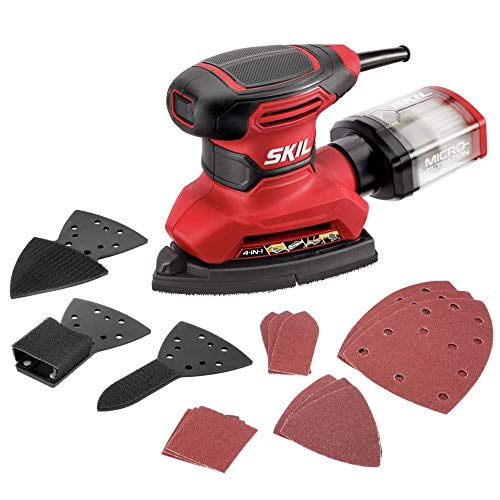
This SKIL model is a versatile 4-in-1 detail sander equipped with three additional detail attachments, making it well suited for furniture tasks that require finishing around corners, edges, and contours. A micro-filtration dust box and a 1-1/4″ dust port support cleaner work environments, ideal for mid-sized refinishing projects. Best for: users who want quick attachment changes and multi-surface capability. Caution: Changing attachments without a quick-release mechanism may slow you down on tight schedules.
HYCHIKA Detail Sander

The HYCHIKA detail sander covers tight spots with a compact design and a 14,000 OPM motor. It includes 12 sanding sheets across multiple grits (P80, P120, P240) and a six-hole dust collection system. Best for: quick finishing tasks in narrow areas or small furniture components. Caution: Power is rated at 1.6 amps; users upgrading to heavier sanding jobs should consider a more powerful model for faster material removal.
DOVAMAN 130W Detail Sander

The DOVAMAN palm sander runs on a 1.1 Amp copper motor with speeds up to 12,000 RPM, making it suitable for wood and metal surfaces. It offers two dust collection options—dust box or connection to a household vacuum—for flexible dust control. Best for: crafters who need不错 dust management and one-handed operation in tight spaces. Caution: Dual dust collection options may require additional setup time when switching between modes.
Prostormer Detail Sander

The Prostormer model is a compact 13000 OPM sander with 15 included sanding sheets and a multi-grit system (P60, P120, P180) for deburring through polishing. It uses a 1.6A motor and a 5-hole dust collection system to keep the workspace cleaner. Best for: woodworkers who frequently switch between materials and finishes. Caution: The bundled sandpaper variety is helpful, but users may still need additional grits for specialized projects.
Buying Guide
Key factors to consider when selecting a palm/detail sander for furniture:
- Dust management: Look for dust collection bags or vacuum connections to minimize cleanup and protect respiratory health.
- Pad size and shape: Smaller pads let you reach tight corners; larger pads remove material faster on flat surfaces.
- Motor power and speed: Higher RPM helps with finishing; lighter tasks are handled well by models around 1.0–1.6 amps.
- Attachments and grits: A model with multiple grits and easy attachment changes saves time on refinishing projects.
- Ergonomics and weight: Lighter and well-balanced tools reduce fatigue for longer sessions.
- Durability and maintenance: Look for simple replacement parts and a straightforward dust system for ongoing use.
Frequently Asked Questions
- What is a palm sander best used for on furniture?
Ideal for detail work, edge smoothing, and finishing surfaces where large sanders would be unwieldy.
- Should I choose a corded or cordless palm sander for furniture refinishing?
Corded tools typically provide consistent power for extended sessions; cordless models offer portability for small projects.
- How important is dust collection for indoor furniture work?
Very important; better dust collection reduces cleanup and improves air quality while you work.
- Can a detail sander replace a random orbital sander for finishing?
Detail sanders excel at corners and edges, but a random orbital sander is often better for large flat surfaces.
- What grits should I start with when refinishing furniture?
Begin with a coarser grit (around P80–P120) for strippable finishes, then move to finer grits (P180–P240) for smoothing.
- Is vibration a concern with palm sanders?
Most models are designed to minimize vibration, but choosing a lighter, well-balanced tool helps reduce fatigue.