If you’re protecting concrete, brick, or stone from water damage, these penetrating sealers offer durable, invisible protection. This guide highlights five top options and explains who each product is best for, plus practical buying tips. Ideal buyers include homeowners sealing sidewalks or patios, contractors needing long-lasting outdoor protection, and property owners seeking easy-to-apply spray or roll-on solutions.
Overview of selected products
| Product | Brand | Why It Stands Out |
|---|---|---|
| MasonryDefender All Purpose Brick Stone & Concrete Sealer | MasonryDefender | Deep-penetrating silane siloxane barrier; clear finish; broad outdoor use. |
| Eco Advance Concrete/Masonry Siloxane Odorless | Eco Advance | Ready-to-use spray formulation; safe for plants, pets, and people; versatile on many surfaces. |
| NOON’S UP Super Mica-Seal | NOON’S UP | Deep-penetration water-based sealer; easy spray application; durable moisture barrier. |
| MasonryDefender Concrete Sealer | MasonryDefender | Clear, non-glossy protection; breathes with surface; resists freeze-thaw and salts. |
| Armor SX5000 WB Silane-Siloxane | Foundation Armor | Professional-grade, reduces water absorption up to 95%; maintains natural look. |
MasonryDefender All Purpose Brick Stone & Concrete Sealer
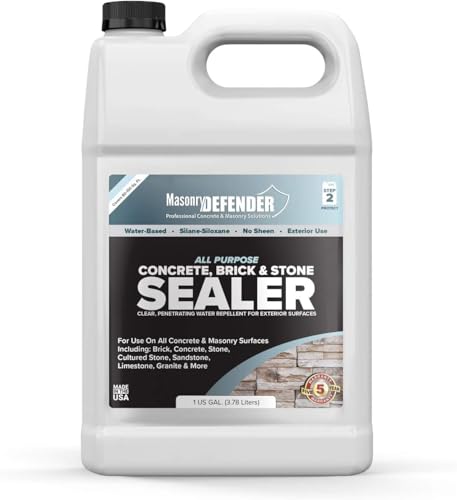
Best for: Outdoor masonry that requires deep protection without changing appearance. The silane siloxane sealer penetrates to form a barrier that blocks moisture while preserving the surface’s natural look. The product is suitable for concrete, brick, and stone surfaces such as patios, sidewalks, and exterior walls. A 1 gallon quantity covers roughly 90-150 square feet for effective results. Caution: Over-application can slow drying in shaded areas.
Eco Advance Concrete/Masonry Siloxane Odorless Spray

Best for: Quick, spray-on protection on a variety of outdoor surfaces. It’s ready-to-use and suitable for concrete, brick, stucco, natural or synthetic stone, EIFS, and pavers. It helps protect against water damage, oils, de-icing salts, and pool/spa chemicals. Caution: Odorless formulas may still require proper ventilation during application.
NOON’S UP Super Mica-Seal

Best for: Surfaces needing deep penetration and a durable moisture barrier without noticeable gloss. The water-based formula penetrates into small cracks and pores on clean, dry surfaces and is easy to apply with a spray. Caution: May require reapplication if surface exposure is heavy or if the area experiences extreme weather.
MasonryDefender Concrete Sealer (Deep Penetrating)

Best for: Long-lasting outdoor defense for driveways, sidewalks, and patios. The silane siloxane formula bonds with the surface to repel water while allowing the concrete to breathe. It’s ideal where moisture and freeze-thaw cycles are concerns. Caution: It is a clear sealer; do not expect a glossy finish.
Armor SX5000 WB Silane-Siloxane

Best for: Professionals seeking a high-performance, water-based sealer that reduces absorption by up to 95% without altering appearance. Suitable for unsealed concrete, brick, pavers, stone, and masonry. Caution: May require multiple coats for very porous surfaces or heavy exposure areas.
Buying Guide: Concrete And Masonry Sealer Considerations
What should you consider when choosing a sealer? Look at penetration depth, visible look after sealing, and surface compatibility. For outdoor use, prioritize breathable formulas that resist freeze-thaw cycles and de-icing salts. If you prefer spray-on convenience, grab a ready-to-use product. For long-term protection, select sealers with silane-siloxane chemistry that bonds beneath the surface to form a durable barrier.
Surface type and porosity
Concrete and masonry vary in porosity. Porous surfaces absorb more sealer and may require multiple coats. Penetrating sealers work best for outdoor areas exposed to weather, preventing moisture ingress without changing color or texture.
Breathability and moisture management
Choose products that allow the surface to “breathe” while blocking liquid water. This reduces the risk of trapped moisture leading to cracking or efflorescence, especially under freeze-thaw cycles.
Appearance and finish
Most penetrating sealers are clear and do not alter the surface color. If a glossy or matte finish is desired, consider surface-applied sealers with visible sheen, but note how this may affect appearance and cleaning.
Application method
Spray-on formulas offer quick, even coverage for larger areas. Brush-and-roll options may be better for intricate surfaces. Ensure the surface is clean and dry before application and follow the manufacturer’s cure times for best results.
Durability and maintenance
Longer-lasting sealers reduce maintenance by resisting water and staining. Some products require reapplication every few years, depending on exposure, traffic, and climate. Plan for future re-sealing based on surface wear and environmental stressors.
Safety and environmental impact
Look for low-VOC or zero-VOC formulas if indoor use or enclosed spaces are involved. Odorless options may be preferable when applying near living areas or gardens.
Product selection checklist by use case
- Residential patios and driveways: deep-penetrating silane-siloxane sealers for long-lasting moisture protection.
- Brick and stone exterior walls: breathable, non-glossy coatings that resist weathering without altering color.
- Spray-on convenience: ready-to-use formulations for quick projects and larger areas.
- Pet- and plant-friendly applications: odorless, low-toxicity options for areas near landscaping.
Frequently asked questions
- What is the difference between penetrating sealers and surface coatings?
Penetrating sealers absorb into the material to repel water; surface coatings form a film on the surface and may alter appearance. - Will a sealer change the look of my concrete?
Most penetrating sealers are clear and do not change color or texture, but some surface coatings can add sheen. - How often should I re-seal outdoor concrete?
Re-sealing frequency depends on exposure, but many surfaces benefit from reapplication every 3–7 years. - Is it safe to seal near plants and pets?
Choose odorless or low-VOC sealers and follow ventilation and curing guidelines for safety. - Can I seal wet surfaces?
Sealers require a dry surface for proper penetration and bonding; wait for dry conditions as recommended by the product.