Answering the need for compact, detail-oriented sanding, these small-area sanders deliver precise control for corners, edges, and tight spots. The best options below are suited for hobbyists, DIY repairs, furniture touch-ups, and professional projects that demand meticulous finish work in confined spaces. Each entry notes who benefits most, what makes it stand out, and a practical limitation to consider.
Quick product snapshot:
- Skil SR232301: Best for versatile 4-in-1 functionality and dust control in tight spaces.
- WEN 6307: Best for adjustable belt speed and flexible angle access in detail tasks.
- POLIWELL Micro Sander Kit: Best for value-packed detail sanding with multiple grits.
- TOVPADE 54PCS: Best for a complete micro-sanding kit with color-coded grits.
- Pihemum 180 PCS Kit: Best for broad grit range and quick-change convenience.
Skil Corded Multi-Function Detail Sander
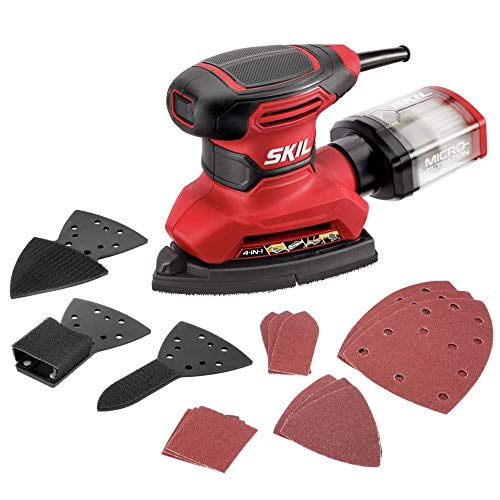
The Skil SR232301 is a 4-in-1 detail sander with a 1.2 amp motor delivering 13,500 orbits per minute for smooth finish across small areas. It includes three extra detail attachments for fine finishing on corners, edges, and contours. A micro-filtration dust system and a 1-1/4″ dust port help manage cleanup during precise work. Best for: DIY enthusiasts and cabinet refinishing where multiple contours exist in tight spaces. Limitation: Power is corded, which may limit mobility on large projects.
WEN 6307 Variable Speed Detailing File Sander
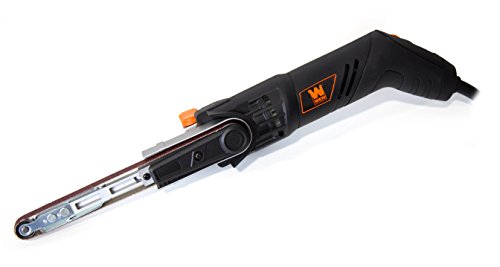
The WEN 6307 offers a 1/2-by-18″ belt with variable speeds from 1080 to 1800 feet per minute and an auto-tracking belt system that requires no tensioning. Its 50° range of motion lets you angle the belt to reach awkward corners. Best for: small projects where belt speed control matters and you need adaptable angles. Limitation: Belt length may be less effective for deeper gaps compared to larger detail blocks.
POLIWELL Micro Sander Kit

The POLIWELL kit provides a 3.5″ x 1″ micro sander with 5 grit options (80, 120, 180, 240, 400). Its comfortable grip and soft PU body support precision work in tight spaces and on small surfaces. Best for: beginners and hobbyists who need an affordable, compact sander for fine detailing. Limitation: Fewer grit ranges may require supplementing with other grits for very coarse shaping.
TOVPADE 54PCS Micro Sander Kit
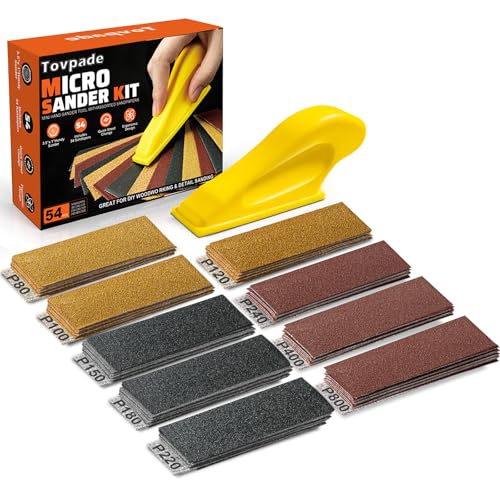
The Tovpade kit combines a compact sanding block with 54 sheets across nine grit types (80–800). A color-coded grit system helps avoid mis-grits, and a quick-swap hook-and-loop backing speeds changes. Best for: users needing a ready-to-use micro-sanding kit with a wide grit range. Limitation: The included sheets may wear quickly on harder materials, requiring replacements.
Pihemum 180 PCS Mini Detail Sanding Kit

The Pihemum kit offers 180 sheets in nine grits (80/120/180/220/320/400/600/800/1000) plus a compact micro sanding block. Its 3-color grit system helps quick identification, and tool-free backing enables rapid paper changes. Best for: woodworkers and crafters who require a broad grit spectrum in a portable package. Limitation: The bulk of sheets may be unnecessary for very small tasks and could be storage-heavy.
Buying Guide: How To Choose The Right Detail Sander For Small Areas
What matters most when selecting a detail sander for tight spots? Consider power, sanding belt or pad size, grit range, dust management, and ease of paper changes. For precision on corners, look for models with curved or small pads and adjustable angles. If dust control is essential, prioritize micro-filtration or dust collection options. Portability matters for on-site projects; corded models excel in power, while cordless variants offer mobility.
Power and speed: Higher OPM or belt speeds remove material faster, but can generate more heat and dust. For delicate finishes, a model with variable speed helps control material removal. A compact footprint is ideal for small areas; ensure the pad or belt accesses edges, corners, and contours evenly.
Grit range and paper changes: Kits with a broad grit spectrum cover rough shaping to fine finishing. Tool-free backing and quick-change systems reduce downtime between grits, keeping projects on track. Color-coded grits minimize errors, especially for beginners.
Dust handling: A robust dust-collection system or a recessed micro-filtration box helps keep the work area clean and extends sanding time between cleanups. For sensitive indoor projects, a system that minimizes dust escape is beneficial.
Best-use scenarios by buyer type:
- DIY homeowners: Look for multi-attachments and complete grit kits for flexible finishing tasks.
- Cabinet refinishing: Prioritize models with dust collection and low-vibration operation for smoother surfaces.
- Crafts and model making: Choose compact blocks with color-coded grits for quick setup and accuracy.
- Professional builders: Consider higher torque capability, broader grit coverage, and durable backing for long projects.
Frequently Asked Questions
- What is the best sander for tight corners?
Detail sanders with small pads and flexible angles are ideal for corners and edges; look for models rated for intricate work and with easy paper changes. - Do I need a dust collection system on a detail sander?
Dust control improves visibility and finish quality, especially in indoor spaces or for fine detail work. - Should I choose a belt sander or a palm sander for small areas?
Palm or detail sanders are typically better for small areas; belt sanders excel at material removal but are bulkier and less precise in tight spots. - Is a cordless option better for detailing?
Cordless can offer mobility for on-site tasks, but may have limited run-time and lower continuous power compared to corded models. - How many grits should a starter detail kit include?
A starter kit benefits from at least four grits (coarse to fine), plus a few mid-range options for finishing tasks. - What safety steps are important when detailing wood?
Wearing eye protection, a dust mask, and ensuring the workpiece is securely clamped helps prevent injury and dust exposure.