Answering the question “which air-powered orbital sander should I choose?” this guide highlights five top pneumatic palm sanders that balance power, control, and durability. These tools are best for woodworkers, auto body technicians, and metal workers who need consistent finishes with low vibration and reliable performance. The following selections emphasize comfort, motor strength, and practical features like dust collection and speed control.
Buyer’s quick reference table (selected products):
- ZFE Random Orbital Sander 5″ & 6″: Best for versatile 5″ and 6″ sanding with low vibration and integrated dust collection.
- Ingersoll Rand 300G: Best for lightweight, pro-grade comfort and 6″ sanding power.
- Gedu Professional Air Random Orbital Palm Sander: Best for low vibration and balanced sanding on heavy-duty tasks.
- Ingersoll Rand 328B Dual Action Geared Sander: Best for heavy material removal on large surfaces with swirl-free finish.
- RYCUBRE 5/6 Inch Sander: Best for auto body prep and multi-material use with ergonomic design.
ZFE 5″/6″ Random Orbital Pneumatic Sander

This lightweight, ergonomic sander is designed for deburring wood, polishing metals, and prepping paint surfaces. It supports both 5″ and 6″ applications with a long-lasting all-steel movement and a regulator-capable drive up to 10,000 rpm. Best for workshop pros who need a versatile tool with steady performance and straightforward dust control.
Who should buy: Best for woodworkers needing a durable, versatile sander with a practical dust setup. Also suitable for metal prepping and coating work in small to mid-sized shops.
Selected for: Strong construction, speed control capability, and included dust-tube/dust bag system.
Caution: Some users may find the 1-meter vacuum and hose setup requires an extra dust-collection accessory for large workshops.
Ingersoll Rand 300G Random Orbital Sander

Equipped with a 0.2 HP motor, this sander blends weight under 2 lbs with a contoured grip for comfortable extended use. The composite body reduces fatigue while delivering reliable random-orbital action for smooth finishes on wood, metal, and composite surfaces. Best for detail work and long sessions where hand fatigue is a concern.
Who should buy: Best for professionals who prioritize light weight and ergonomic handling during lengthy projects.
Selected for: Lightweight design and balanced feel, which helps minimize user fatigue during continuous sanding.
Caution: Low-profile body means users should verify compatibility with their existing dust extraction setup for optimal dust management.
Gedu 6″ Professional Air Random Orbital Sander

With a high-quality professional build, this 6″ sander emphasizes low vibration and a well-balanced sanding pad for swirl-free finishes. It features a light weight frame and a low center of gravity design for steady control during long jobs. Best for finish work where a smooth, consistent texture is critical.
Who should buy: Best for users needing a reliable, low-vibration sander that maintains balance across prolonged sessions.
Selected for: Low vibration and balanced pad for finish-oriented projects.
Caution: As a professional tool, it may require a compatible hose and connector setup for certain dust-extraction systems.
Ingersoll Rand 328B Dual Action Geared Sander
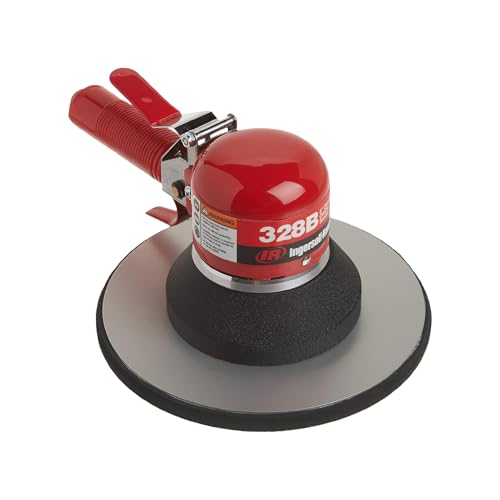
This geared dual-action sander delivers robustness for heavy material removal with an 8″ adhesive pad and a 5/32″ orbit. It’s designed to balance power, control, and durability for large flat surfaces, delivering swirl-free results when used with the appropriate grit and technique.
Who should buy: Best for body work and heavy removal on large surfaces where speed matters, but finish quality remains important.
Selected for: Large 8″ pad and geared action for efficient material removal and stable operation.
Caution: Higher RPM and larger pad might require more workspace to maneuver and could increase noise; ensure proper hearing protection in busy shops.
RYCUBRE 5/6 Inch Pneumatic Sander

This high-speed dual-action (DA) sander offers a 5 mm orbit for even sanding on wood, metal, fiberglass, and automotive finishes. Its anti-fatigue cushioned grip supports extended sessions, while a heavy-duty all-steel core ensures longevity and reduced vibration for smoother results.
Who should buy: Best for auto body prep and multi-material sanding tasks where comfort and durability are critical.
Selected for: High-speed performance with a focus on long-term operator comfort and tool longevity.
Caution: As a compact palm sander, it may require a separate dust extraction solution for dedicated workshop setups.
UPWOOD 5-Inch Random Orbital Kit

This semi-industrial tool transfer includes a 5″ sander, 10 sanding sheets, and 10 sanding wheels, with the option to switch to a 6″ backing pad. Its 5/16″-24 pad thread guidance makes it a flexible choice for car repair and furniture finishing. Best for mixed-use projects where versatility matters.
Who should buy: Best for hobbyists and shop owners who need kit versatility and extra sanding media for ongoing projects.
Selected for: Mix-and-match capability and kit-ready packaging for quick setup.
Caution: Pad availability and backing options require additional purchases for full 6″ compatibility or PSA pads.
Buying Guide
- What to prioritize: Consider pad diameter (5″ vs 6″), orbit size (commonly 5 mm), and weight. Larger pads remove material faster on big surfaces but can be harder to control in tight corners.
- Vibration and comfort: Look for low-vibration designs, anti-fatigue grips, and balanced sanding heads to reduce user fatigue during long sessions.
- Power and speed control: A built-in regulator or adjustable speed control helps tailor performance to wood, metal, or composites. Higher rpm supports faster material removal but requires careful technique for a swirl-free finish.
- Dust management: Attachments for dust bags or compatible hoses improve the working environment and finish quality. Ensure compatibility with your dust extraction system.
- Durability vs. budget: All-steel cores and gear-driven actions offer longevity, but lighter composites may suffice for occasional use. Choose based on project load and expected frequency.
- Applications matrix: For wood finishing and auto body prep, prioritize low vibration and reliable balance. For heavy surface removal, consider geared or dual-action designs with larger pads.
FAQ
- What is an orbital sander’s main benefit for finishes?
It delivers random, swirl-free sanding patterns that produce smoother final surfaces when used with correct grit progression. - Should I choose 5″ or 6″ sanders?
6″ sanders remove material faster on flat surfaces; 5″ sanders offer better control in tight areas. - What does low vibration imply for work quality?
Lower vibration reduces hand fatigue and helps maintain consistent pressure, improving finish quality over long sessions. - Is dust collection essential for pneumatic sanders?
Yes. It helps maintain visibility, reduces airborne dust, and can extend tool life by keeping debris away from moving parts. - Can I use PSA and hook-and-loop pads interchangeably?
Some models support both; verify pad threading and backing compatibility before mixing pad types. - What maintenance steps improve tool longevity?
Regularly inspect hoses, keep connectors tight, clean dust from vents, and store in a dry environment to prevent rust and wear.
Note: This article presents objective, spec-based guidance using the provided product data. For best results, select a model that aligns with your primary tasks—wood finishing, metal prep, or auto body work—and ensure compatibility with your dust extraction setup and existing workshop tools.