When you need dependable 600 grit sanding belts, these options are ideal for metal polishing, wood finishing, and knife sharpening. This roundup highlights belts that offer durable construction, waterproof backing, and consistent grit performance. The best picks vary by backing material, joint quality, and compatibility with common belt sanders—helpful for hobbyists and professionals alike. The top five selections below are chosen for reliability, value, and suitability across wet or dry applications.
| Product | Grit Range | Backing Type | Best For |
|---|---|---|---|
| RUIHONGV 8 Pack 4×36 Inch Sanding Belts | 400/600/800/1000 | X-weight polyester, fully waterproof | Metal, wood, stone finishing; long belt life |
| SACKORANGE 6 Pack 4×36 Inch Sanding Belts | 120/240/400/600/800/1000 | Y-weight polyester, waterproof | Versatile projects; wet or dry use |
| Kozelo 6 Pack 2×36 Inch Sanding Belts | 600 | Butt joint, firm interface | High-speed grinding and knife work |
| Bskifnn 30 Pack 1×30 Inch Sanding Belts | 120/240/400/600/800/1000 | Resin-coated aluminum oxide, waterproof | Wide belt choices for narrow to wide belts |
| Donanim 4×36 Inch 600/800/1000 Grits | 600/800/1000 | Waterproof, silicon carbide with heavy backing | Knife sharpening and metal finishing |
RUIHONGV 8 Pack 4×36 Inch Sanding Belts
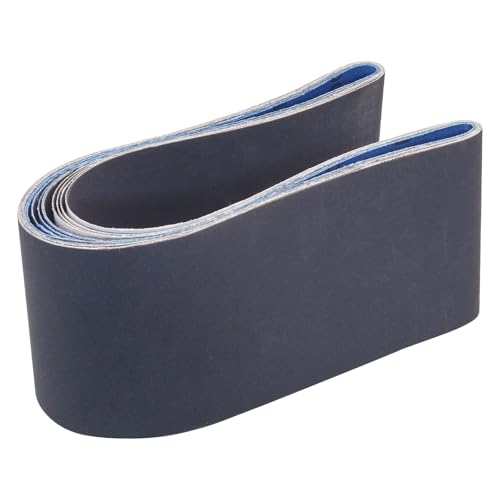
The RUIHONGV selection includes 400, 600, 800, and 1000 grit belts. The belts use premium silicon carbide material with an X-weight, fully waterproof polyester backing, designed for wet or dry use. Best for metal polishing, wood finishing, and knife work where consistent wear resistance and a sharp edge are important. The multi-grit assortment supports a broad range of project needs, from aggressive material removal to fine refinishing. Caution: belt life varies with material hardness and sand rate; slower feed rates reduce heat buildup and prolong belt life.
SACKORANGE 6 Pack 4×36 Inch Belts

This set covers 120, 240, 400, 600, 800, and 1000 grit, offering a complete range for initial shaping to fine polishing. Backed by heavy-duty Y-weight polyester, these belts are designed to resist water and maintain performance in damp environments. The bi-directional tape joint and anti-clogging stearate help keep belts feeding smoothly, reducing downtime. Best for versatile shop tasks, from knife shaping to metalworking. Limitation: broader grits may be less effective on extremely hard materials without appropriate feed rates.
Kozelo 6 Pack 2×36 Inch 600 Grit

With a dedicated 600 grit, these belts prioritize consistent material removal at speed, suitable for belt sander metal grinding and knife work. The butt joint technology reduces splicing bulge for smoother grinding and longer belt life under high-speed rotation. Best for users who need dependable 600 grit performance in a compact belt size. Caution: slightly narrower belt width may require alignment checks on some sanders.
Bskifnn 30 Pack 1×30 Inch Belts

This long-format belt pack includes 120, 240, 400, 600, 800, and 1000 grit for 1×30 inch belts, offering versatility for narrow belt sanders. The aluminum oxide grain and tight interface help minimize grit shedding. Best for hobbyists needing a broad selection without buying multiple packs. Limitation: 1×30 inch belts may not fit larger belt sanders without appropriate conversion kits.
Donanim 4×36 Inch 600/800/1000 Grits

Donanim offers a 6-pack style selection at 600, 800, and 1000 grit, featuring waterproof construction and heavy backing for load resistance and durability. Silicon carbide grain is ideal for knife sharpening and metal finishing with good edge retention. Best for users who want a compact kit with steady grit progression. Caution: always verify belt tension to prevent belt buckling at high speeds.
Buying Guide
What should I look for in 600 grit sanding belts?
Key factors include material quality (silicon carbide vs aluminum oxide), backing strength (X-weight vs Y-weight), waterproofing for wet or dry use, joint type (butt vs seamless), and belt width compatible with your sander. Higher-quality belts resist loading and wear, providing consistent cuts across the grit range.
Should I choose waterproof belts?
Waterproof belts excel in wet or damp environments and can be used for composite materials or metal finishing where coolant or moisture is present. If you work in a dry shop, non-waterproof options can still perform well but may wear faster when used with lubricants or coolant.
Which belt size and grit range is most versatile?
For 600 grit emphasis, consider belts that also offer 400, 800, and 1000 grits within the same pack. This range supports rough shaping, smoothing, and final finishing without swapping belts prematurely. Sizes like 4×36 and 2×36 cover most hobbyist and light professional belt sanders.
How important is the belt joint quality?
A robust joint reduces the risk of seam alignment issues and belt misfeeds. Options with bi-directional tape joints or butt joints with reinforced interfaces are generally more durable at higher speeds and under load.
What are common limitations to expect?
Belts can wear unevenly on hard metals or ceramic-like materials. Narrow belts may require careful alignment. Some lower-cost sets might shed grit sooner or clog with certain woods; choose products with anti-clogging coatings or stearate additives when transitioning between materials.
How do I extend belt life?
Use appropriate feed rates and avoid excessive pressure. Let the abrasive do the work, keep the workpiece flat, and periodically check belt tension. Wet or dry usage, when appropriate, helps manage heat and reduces loading.
FAQ
- What is 600 grit best for? – It is ideal for refining surfaces after coarse sanding and before final finishing; works well for metal, wood, and knife sharpening tasks.
- Are waterproof belts worth it? – Yes, if you frequently work in damp conditions or use coolant; they resist wear and loading better in those environments.
- Can belts be used on small and large sanders? – Most 4×36 and 2×36 belts fit common portable belt sanders; always verify belt size compatibility with your tool.
- Should I buy a mixed grit pack or single-grit pack? – Mixed packs offer flexibility for sequences from coarse to fine; single-grit packs are simpler if you know your exact need.
- Do belt belts affect sharpening results? – Yes, consistent grit and proper tension contribute to uniform sharpening and better edge retention.