Choosing the right flexible plastic body filler depends on the repair you’re tackling, the plastic substrate involved, and how quickly you need results. This guide highlights five top options that balance flexibility, sandability, and ease of use for U.S. buyers. Each product is suited to specific scenarios—whether you’re patching bumper plastics, repairing panels, or tackling light damage on flexible substrates. Below, compare features, ideal uses, and potential limitations to help you decide.
| Product | Best For | Key Benefit |
|---|---|---|
| Carworx Flex Filler for Plastic | Professional bumper and panel repairs | Reduces micro-pores and reveals surface defects for precise feathering |
| J-B Weld PlasticBonder | Strong, permanent bonds on plastics | 1:1 mix, quick cure, sandable in 30 minutes |
| Roberlo Multiplast | Lightweight, fast-drying plastic repair | Original hardener included, durable finish |
| U-Pol Stronghold | Plastic bumper repairs and gouges | No gun required, efficient for road rash |
| Polyvance Flex Filler 2 | Flexible parts and OEM/aftermarket plastics | Remains flexible after curing, simple squeeze tubes |
Carworx Flex Filler for Plastic Bumper & Body Panel Repair
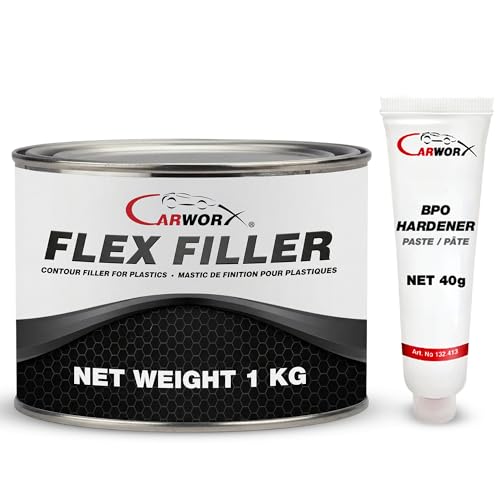
Best for professional bumper repair and plastic panel work, Carworx Flex Filler uses a two-component polyester system that’s designed to minimize micro-pinholing. The dark color improves defect visibility, helping technicians feather edges accurately before priming. Each 1 kg kit includes BPO hardener, delivering a ready-to-use system with no extra parts required. Use this when you need a durable, sandable fill that reveals subtle surface flaws for precision repairs.
Who it’s for: body shops and serious DIYers tackling bumper plastics and other flexible panels. Limitation: performance depends on correct hardener mixing; failure to achieve the recommended ratio can affect cure and sanding smoothness.
J-B Weld Plastic Bonder Body Panel Adhesive and Gap Filler Syringe
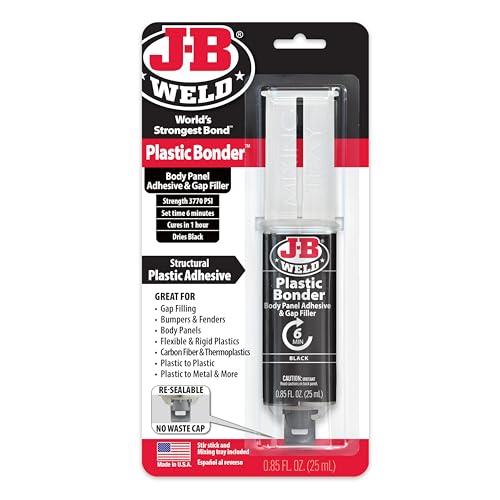
Best for quick, strong bonds on a variety of plastics, J-B Weld PlasticBonder is a two-part urethane adhesive system with a 1:1 mix ratio. It sets in about 15 minutes and can be sanded after 30 minutes, offering a fast path to durable repairs on thermoplastics, carbon fiber composites, and coated metals. This is a solid choice when you need an adhesive that doubles as a gap filler with high tensile strength. Caution: works best on clean, dry surfaces and may require careful application for tight gaps.
Roberlo Multiplast Lightweight Body Filler + Hardener

Best for lightweight, easy-to-handle plastic repairs, Multiplast is designed for fast application and smooth finishes. The kit includes the original hardener to ensure proper curing and performance. It’s suitable for plastic or metal repairs, delivering durable results with less weight and simple sanding. Choose this if you want a practical, professional-grade product that keeps application simple and predictable. Limitation: may require longer cure times in cooler environments for optimal hardness.
U-Pol Stronghold Body Filler for Plastic
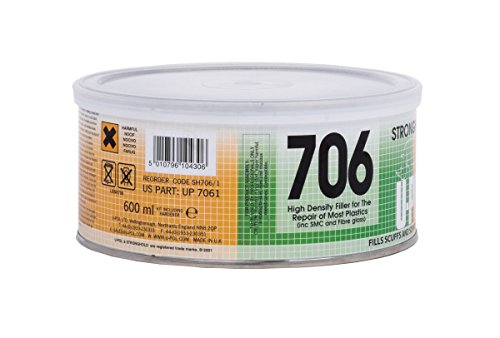
Best for plastic bumper fixes and gouges, U-Pol Stronghold provides a practical, gun-free solution for quick repairs. It’s an efficient option when you want an all-in-one filler that minimizes the need for additional equipment. Caution: product data notes indicate it’s optimized for plastic surfaces; verify your substrate compatibility if dealing with unusual plastics.
Polyvance Flex Filler 2 (Tubes)

Best for flexible parts and both OEM and aftermarket plastics, Polyvance Flex Filler 2 stays flexible after curing and sands quickly, making it ideal for automotive plastics that endure flexing. The squeeze-tube design simplifies dispensing without special tips or guns. Use this when you need a flexible, easy-to-dispense filler for fast repairs on plastic substrates. Limitation: may be less suitable for heavy gouges where a stiffer filler performs better.
Eastwood Contour Premium Automotive Flexible Body Filler

Best used for plastic bumpers and areas prone to light impacts, Eastwood Contour Premium is a flexible polyester filler designed to maintain flexibility after drying. It sands smooth and helps prevent cracking on flexing panels. Choose this when you want a product specifically formulated to reduce cracking during panel flexing and impact. Caution: color is gray and may require compatible primers and paints for best appearance.
Calvana 2 Pack 20g Car Body Filler Repair Kit
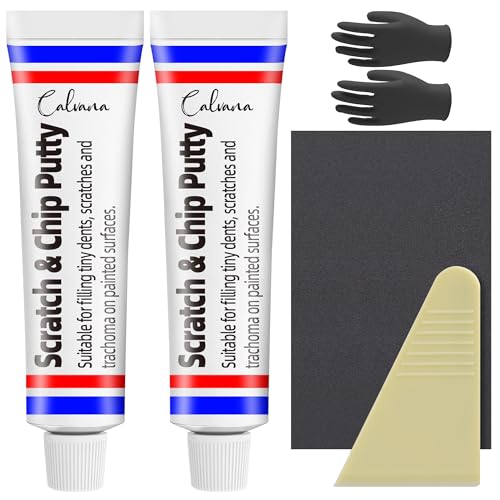
Best for minor touch-ups and quick scratch repairs, Calvana offers a compact two-pack kit with quick-drying formula and repair tools. It’s suitable for small dents and scratches across various paint types. Use this when you need a cost-effective, user-friendly option for light cosmetic fixes. Limitation: not ideal for large gouges or structural repairs where a heavier filler is required.
Buying Guide: Flexible Plastic Body Fillers — Key Considerations
What substrate are you repairing? Plastic fillers vary in compatibility with bumper plastics, ABS, PP/EPDM, and other polymers. Check the recommended plastics for each product to ensure adhesion and flexibility stay reliable after cure.
Do you need fast drying or extended working time? Some fillers cure quickly, which is good for tight schedules but challenging for complex feathering. Others offer longer open times for precise shaping. Consider your workflow when choosing.
Is a hardener included or required? Many kits include hardeners, but some systems necessitate separate sourcing. A complete kit saves time and reduces the risk of using incompatible components.
How important is visibility of defects during application? Darker filler tones help reveal minor surface defects and feathering lines, aiding precision, while lighter shades may be harder to judge in some lighting conditions.
What is the final finishing goal? If you’re aiming for a smooth topcoat, you’ll want a filler that sands easily and doesn’t crack under flexing. For bumper plastics that flex, maintaining elasticity after curing reduces rework from minor impacts.
FAQ
- What is the advantage of a flexible plastic filler? It resists cracking when panels flex or are subjected to minor impacts, improving durability and reducing rework.
- Can I use any hardener with plastic fillers? Most systems require the manufacturer’s hardener to achieve proper cure and performance. Mixing unknown hardeners can lead to poor adhesion or improper curing.
- What substrates are compatible with these fillers? These products cover common automotive plastics such as bumper plastics (PP/EPDM), ABS, and PC/PA blends; check manufacturer guidance for each substrate.
- How long does curing take? Cure times vary with temperature and humidity; follow the product’s specified time and temperature guidelines for best results.
- Is sanding necessary after curing? Yes, sanding ensures a smooth finish before primer and paint. Use appropriate grits to avoid gouging the cured surface.
- Do I need special tools to apply these fillers? Some systems come as ready-to-use syringes or squeeze tubes, while others may require mixing. Use the method recommended by the manufacturer for best results.