Waterproofing a wall exterior means selecting sealants and coatings that block moisture while preserving look and durability. This guide highlights five top products that balance penetration, film-forming protection, and ease of application for different wall types. Ideal buyers include DIY homeowners, professional contractors, and property managers seeking long-lasting protection for brick, concrete, masonry, and stucco.
| Product | Best For |
|---|---|
| KILZ Basement and Masonry Waterproofing Paint | Interior or exterior masonry surfaces, basements, concrete blocks |
| Ames Blue Max Liquid Rubber Waterproofer | Flexible elastomeric protection for above/below grade and roof surfaces |
| MasonryDefender All Purpose Sealer | Outdoor masonry: brick, stone, concrete |
| Stormdry Brick Sealer | Long-lasting penetrative damp protection for brick and masonry |
| SCNK Transparent Waterproof Coating | Multi-surface, clear protection for roofs and walls |
KILZ Basement and Masonry Waterproofing Paint
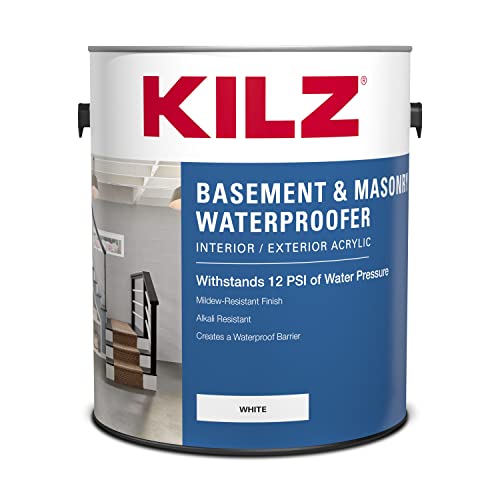
KILZ uses nanotechnology to form a water barrier that blocks up to 12 PSI of pressure on concrete and masonry surfaces. It’s suitable for both interior and exterior use, making it versatile for basement walls, brick, concrete blocks, stucco, and retaining walls. For below-grade applications, fill cracks with hydraulic cement before painting. Not recommended for floors or walls with active water leaks. This option is best for long-term decorative protection in areas with high moisture and moderate hydrostatic pressure.
Best for: Homeowners needing a paint-on waterproofing layer that works indoors or outdoors on masonry surfaces. It’s particularly suited to walls that require a finish with some decorative appeal while adding moisture resistance.
Ames Blue Max Liquid Rubber Waterproofer

Ames Blue Max is a durable elastomeric liquid rubber coating with high flexibility (1200% elongation) that resists cracking and peeling. It adheres well to concrete, wood, metal, and similar substrates and can function as a primer and a waterproofer. It’s applicable by brush, roller, or spray on vertical or horizontal surfaces, and it performs across above- and below-grade applications. The flexibility helps accommodate movement in masonry walls, making it a strong choice for seasonal shifts and settlement.
Best for: Projects requiring a highly flexible, single-coat membrane that can act as both primer and waterproofing for diverse substrates, including roofs and foundations. Choose this if you need significant crack-bridging and UV resistance in a single coating.
MasonryDefender All Purpose Brick Stone & Concrete Sealer
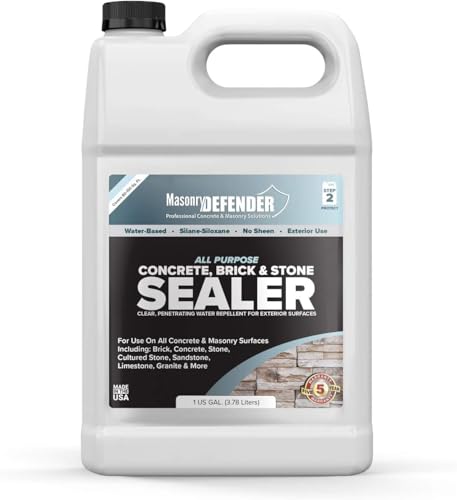
This penetrating silane-siloxane sealer forms a clear, waterproof barrier that preserves the natural look of concrete, brick, and stone. It’s designed for outdoor masonry and provides long-lasting protection without changing surface appearance. Coverage ranges around 90-150 sq. ft. per gallon, depending on porosity. It’s an excellent option when you want a truly low-profile, breathable shield against moisture while maintaining the original texture and color of the surface.
Best for: Exterior masonry surfaces where you want to maintain the natural appearance while adding durable water repellency. Best for patios, pathways, and outdoor walls where aesthetics matter as much as moisture protection.
Stormdry Brick Sealer (1.5 Gallon)

Stormdry offers a cream-based, penetrating waterproofing treatment that aims for durable, long-lasting protection with a 25-year warranty feel. It penetrates masonry to form an invisible barrier, allowing the wall to breathe. It’s suitable for brick, stone, mortar, cement, sandstone, and granite, but not recommended on limestone or painted surfaces. The single-coat application streamlines projects, though larger areas may require careful timing to ensure complete penetration.
Best for: Long-term damp protection for brick and masonry walls where breathing capability is important. Choose this when you want deep penetration with minimal surface film and a higher assurance period.
SCNK Transparent Waterproof Coating
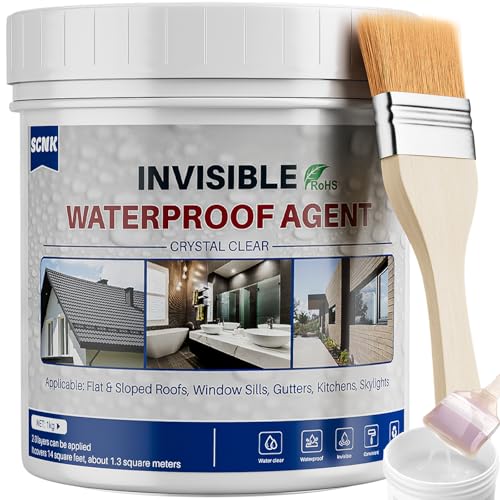
SCNK offers a water-based transparent membrane that cures into a clear waterproof layer. It protects multiple surfaces including roofs, walls, basements, metal, and wood without altering texture or color. The coating is designed to form a dense barrier against air and moisture and can be applied in multiple layers to strengthen protection. It is suitable where you want to maintain the natural look of surfaces while adding a protective sealant.
Best for: Versatile, clear protection across multiple surfaces where preserving appearance matters. Suitable for projects where color or texture preservation is a priority while adding waterproofing.
Buying Guide: Key Considerations For Exterior Wall Waterproofing
- Surface type: Choose products tailored to brick, stone, concrete, stucco, or wood. Some sealers are breathable, others form a film. Match to your wall’s porosity and movement.
- Penetration vs. film: Penetrating sealers minimize surface change; film-forming coatings can provide a visible layer. Consider aesthetics and climate exposure.
- Hydrostatic pressure: If walls face active water intrusion, select products stating higher resistance to pressure or choose elastomeric coatings with crack-bridging properties.
- Breathability: In insulated or cavity walls, breathable formulations prevent moisture trapping. Not all coatings allow breathing; verify product specs.
- Application method: Some products are brush/roll compatible, others support spray. For large areas, choose formulations that are easy to apply evenly.
- Reapplication cadence: Evaluate weather resistance, UV stability, and maintenance cycles to minimize future upkeep.
FAQ
- What is the difference between penetrating sealers and waterproof coatings?
Penetrating sealers absorb into the substrate and repel water without forming a thick surface layer, while waterproof coatings create a protective film or membrane on the surface. - Can these products be used on interior and exterior walls?
Yes, several listed options are suitable for both, including basements and exterior masonry. - Should I seal brick before painting?
Sealing before painting can reduce moisture ingress and improve paint adhesion, especially on porous bricks. - Is breathing important for exterior walls?
Breathing allows moisture to escape, reducing the risk of moisture-related damage behind coatings; choose breathable sealers for cavities and insulated walls. - How do I choose the right product for damp basements?
Prioritize products with strong hydrostatic resistance and elastomeric properties to bridge minor cracks and prevent seepage. - Are there coatings that preserve appearance while sealing?
Yes, penetrating sealers and clear coatings maintain the surface look while providing waterproof protection.