Answering the need for fire safety in wood projects, this guide highlights top fire retardant sprays and coatings that work well on wood, fabric, and assorted absorbent materials. The selections here are suited for homeowners, DIY hobbyists, and professionals seeking reliable, non-toxic solutions that dry clear and can be applied without specialized equipment. Each product is evaluated for ease of use, safety profile, and applicability to typical residential or light-commercial settings. A quick buyer’s table follows to help you compare at a glance.
| Product | Size | Best For |
|---|---|---|
| Master Flame Class A Fire Retardant Spray (Gallon) | 1 Gallon | Large-area wood, textiles, and upholstery projects in homes or schools |
| Master Flame Class A Fire Retardant Spray (Quart) | 1 Quart | Smaller projects and touch-ups on wood and fabrics |
| DRI-ONE Fire Retardant Spray Liquid (Quart) | 1 Quart | Natural textiles and raw wood with quick-drying, easy application |
| DRI-ONE Fire Retardant Spray Liquid (Gallon) | 1 Gallon | Larger volumes for ongoing projects or multi-room applications |
| Clore Fabric & Wood Fire Retardant Spray (Spray Bottle) | Spray Bottle | Drapes, decor, and lightwood items needing a clear, non-sticky finish |
Master Flame 1 Gallon Fire Retardant Spray

Best for: Large wood and fabric projects in occupied spaces. This non-toxic formula is certified for NFPA 701 and ASTM E84, delivering a clear dry finish without odor. It creates a fire-resistant barrier that helps slow flame spread on absorbent materials. The product is water-based and safe for homes, schools, or offices where people will be present during application.
Why chosen: Excellent coverage for bigger areas with a known compliance profile. Suitable for spray, roll-on, or soak methods. Drying time is about 24 hours, enabling subsequent coatings like paint or stain.
Caution: Ensure adequate ventilation during application and test a small area first to confirm no color change on delicate materials.
Master Flame 1 Quart Fire Retardant Spray

Best for: Small to medium wood projects and textiles in domestic spaces. This quart-sized bottle provides precise control for targeted applications without sacrificing safety certification. It dries clear and is compatible with top coats once fully cured.
Why chosen: Combines safety with flexibility for smaller projects or touch-ups. A good balance between cost and coverage for DIYers.
Caution: Use on a test patch first to verify compatibility with finishes already applied on the wood.
DRI-ONE Quart Fire Retardant Spray Liquid

Best for: Natural textiles, raw wood, and absorbent materials where a quick-drying, non-toxic solution is preferred. The product is designed to bond with materials before finishing, helping to limit flame spread and reduce smoke production.
Why chosen: Longstanding industry trust since 1958, with a focus on American-made, non-toxic formulations. No dilution required and dries clear for minimal visual impact.
Caution: Avoid using on surfaces that will receive wax or oil-based finishes immediately after application; test compatibility with any topcoat.
DRI-ONE Gallon & Quart Fire Retardant Set
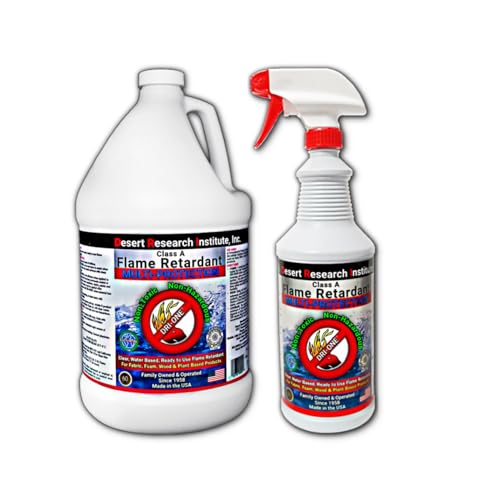
Best for: Flexibility across multiple projects; easy to stock both gallon and quart sizes for varied needs. The formula bonds with materials and dries clear, allowing top coatings afterward without interfering with finish aesthetics.
Why chosen: Offers a practical combination of size options for ongoing safety retrofit projects or mixed-material applications.
Caution: Check local regulations and safe handling guidelines for bulk purchases and storage of large quantities.
Clore Fabric & Wood Fire Retardant Spray

Best for: Drapes, decor, and light wood items where a Class A finish is required without leaving a sticky residue. The spray dries clear and is designed to meet NFPA 701 and CAL Fire Title 19 with an ASTM E84 classification.
Why chosen: Convenience of a spray bottle for targeted areas and textiles, with a focus on non-sticky, clean results after curing. It’s suitable for indoor use in living spaces and bedrooms.
Caution: Suitable for fabric and wood; always test on sensitive fabrics to ensure no color shift or texture change.
Buying Guide: Fire Retardant Wood Finishes for Safe Woodwork
What should you consider when selecting a fire retardant finish?
- Standards and Certification: Look for NFPA 701 and ASTM E84 compliance. These indicate flame resistance performance for building materials and finishes used in inhabited spaces.
- Material Compatibility: Check whether the formula bonds with wood, textiles, or other absorbent materials and whether it accepts subsequent coatings (paint, stain, or clear finishes).
- Application Method: Sprays, rolls, or dips each have pros. Sprays offer ease of use for irregular shapes; dips are efficient for porous items; rolling is convenient for flat surfaces.
- Drying Time and Odor: Water-based, low-odor formulas reduce downtime and are safer in occupied spaces, especially in schools or offices.
- Non-Toxic Formulations: For homes with children or pets, non-toxic and low-VOC options minimize indoor air concerns during and after application.
- Size and Storage: Choose sizes that align with the project scope and future needs. Large containers may be more economical for ongoing work but require proper storage.
- Topcoat Compatibility: If you plan to finish with paint or stain, verify that the retardant does not interfere with adhesion or appearance.
Frequently Asked Questions
- What does NFPA 701 certification mean for a wood finish?
It indicates the material meets flame propagation and fire resistance standards suitable for interiors where fire safety is critical. - Can I apply a water-based topcoat over a fire retardant finish?
Yes, in most cases, but always confirm compatibility with the retardant’s curing instructions and the topcoat’s adhesive properties. - Is a fire retardant finish safe for occupied spaces?
Non-toxic formulations with low odor are designed for use in homes, schools, and offices, but ventilation is still recommended during application. - How should I store large containers of fire retardant?
Store upright in a cool, dry place away from heat sources and direct sunlight. Follow manufacturer guidelines for shelf life and handling. - Can I use these products on both wood and textiles?
Many products are formulated for both porous woods and textiles; always check the listed materials to ensure proper use and coverage. - Do these products affect the natural look of wood?
Most products dry clear, preserving the wood’s appearance, but always perform a patch test on a scrap or inconspicuous area first.