Answering the search for red oil paints, this guide highlights five strong options across student and professional lines. Each pick suits different painters: beginners will appreciate affordability and forgiving handling, while seasoned artists may prefer dedicated single-pigment reds and colorfast options. The table below summarizes key points to compare at a glance.
| Product | Best For | Type | Notes |
|---|---|---|---|
| Cadmium Red Hue (Winsor & Newton Winton) | Budget-conscious students and hobbyists | Student-grade oil color | Reliable performance, permanent, accessible price |
| Perylene Red (Gamblin Artist Oil) | Professional artists seeking rich undertones | Artist-grade oil color | Pure pigments, refined oils, long-lasting color |
| Cadmium Red (Winsor & Newton Artists’ Oil Color) | Serious painters who value single-pigment colors | Artist-grade oil color | Strong tinting strength and clean mixing |
| Transparent Red Oxide / Red Iron Oxide (M. Graham & Co.) | Vibrant, pigment-rich alternatives with walnut oil | Artist-grade oil color | Walnut oil base; pigment load for clarity |
| Napthol Red (Gamblin 1980 Oil Napthol Red) | Students exploring true color at value pricing | Student/entry-level oil paint | Solid true color at a lower price point |
Cadmium Red Hue In Winsor & Newton Winton

Best For: Beginner and student painters who need a reliable, affordable red with consistent performance. This tube offers a dependable color substitute where traditional Cadmium may be restricted by budget or availability. The Winton line is designed for everyday studio use with good coverage and permanence (A – Permanent).
Why selected: It provides a straightforward, non-extreme red option that mixes well and dries in a stable, predictable manner. The color code 095 helps keep palettes organized for quick matching with other pigments.
Caution: Being a hue, it may not perfectly match traditional cadmium red in all mixtures; use as a practical stand-in when exact color matching is not critical.
Perylene Red (Gamblin Artist Oil)
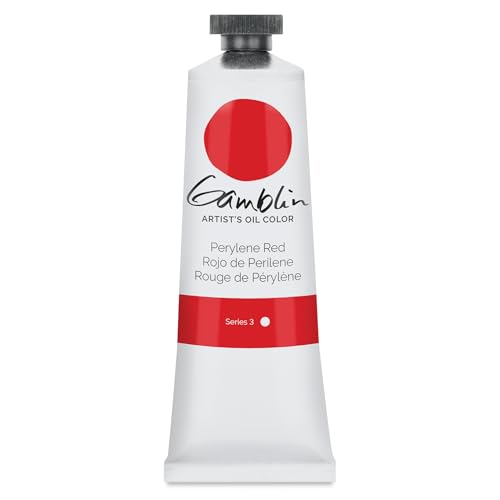
Best For: Professional artists wanting deep, nuanced red with strong tinting strength. Perylene Red is known for its saturated warmth and excellent lightfastness, suited for traditional and contemporary oil painting.
Why selected: The Gamblin formulation emphasizes pure pigments and refined linseed oil, preserving unique undertones and texture. It’s designed to produce lasting, radiant paintings without adulterants.
Limitation: As with high-pigment colors, moderate caution is needed when thinning, as very small amounts can shift undertone in glazes.
Cadmium Red (Winsor & Newton Artists’ Oil Color)

Best For: Artists who value single-pigment colors for clean mixing and color-mulling. The Cadmium Red in this line emphasizes pigment purity and a broad range of tonal options.
Why selected: It offers strong pigment strength and a high-quality production process that supports predictable coverage and tinting power. There are 74 single-pigment colors in the range for mixing precision.
Caution: Cadmium pigments can be more opaque; plan glazing and layering to achieve luminous reds on mixed-media surfaces.
Transparent Red Iron Oxide (M. Graham & Co.)

Best For: Painters seeking a strong, earthy red with a transparent quality and no solvents. Walnut oil base supports a smooth feel and clear color paths in glazing.
Why selected: This pigment load delivers vibrant color while maintaining clarity and reduced discoloration over time, thanks to walnut oil’s stability.
Limitation: Color depth can vary slightly with brush or palette knife technique; test on a sample surface before large-scale use.
Napthol Red (Gamblin 1980 Oil)

Best For: Students and beginner painters exploring a true red with solid coverage and value. This line replacement for Artist Sketch Oils aims to deliver practical pigment performance.
Why selected: The Napthol Red provides true color and good coverage at a favorable price point, making it a practical starter option.
Limitation: As a student-grade option, it may not provide the same longevity or lightfast performance as higher-end lines in all contexts.
Red Oxide (Gamblin 1980 Oil Red Oxide)

Best For: Painters evaluating good red oxide tones for earthy, muted palettes or for glazing in landscapes and portraits.
Why selected: The pigment provides a true color and value in a student-grade option, useful for testing color-mixing strategies.
Limitation: This product may be more limited in vibrancy compared with brighter, single-pigment reds in professional lines.
Buying Guide: Red Oil Paints
What should you consider when choosing red oil paints?
- Pigment type: Single-pigment colors offer cleaner mixing and predictable undertones, essential for controlled glazing. Multi-pigment colors can shift undertones in layers.
- Opacity and tinting strength: Opacity affects layering and glazes. For luminous effects, mix with transparent or semi-transparent reds.
- Medium and binder: Most artist colors use linseed oil or alternatives; balance drying time with your technique.
- Lightfastness and permanence: Look for permanence ratings (A or AA suggests high stability) to ensure longevity of works.
- Price and value: Student-grade lines provide affordable practice, while artist-grade lines deliver color accuracy and permanence for archival work.
- Solvent usage and cleanup: Water-mixable oils offer easier cleanup, but verify compatibility with your current studio setup.
Frequently Asked Questions
- What is the difference between Cadmium Red Hue and Cadmium Red?
– Cadmium Red Hue is a less expensive substitute with similar color in many mixes, while Cadmium Red is a true pigment with stronger tinting and greater lightfastness in professional lines. - Are pigment-rich reds better for glazing?
– Yes, pigment-rich reds provide deeper, stable color in glazes when mixed with glazing medium. - Is a water-mixable oil color suitable for traditional oil painting?
– Water-mixable oils can be used like traditional oils, with the advantage of easier cleanup and reduced solvent use. - Should beginners start with student-grade or artist-grade red oils?
– Beginners often start with student-grade options for cost efficiency and to learn color mixing, then progress to artist-grade for permanence and nuance. - What should I test before a full painting?
– Test color mixing, glazing behavior, drying time, and undertone shifts on a small swatch to ensure compatibility with your palette and technique.