Clear, consistent finishes start with the right air pump paint sprayer. This guide highlights five top options, focusing on reliability, spray patterns, and ease of use for beginners to seasoned DIYers. Each product is suited to different projects and budgets, helping you pick the best tool for furniture, cabinets, walls, fences, and more. The top picks include a versatile 4-nozzle option, a powerful gravity-fed system, a professional-grade model, and user-friendly HVLP sprayers for small-to-wide applications. The following brief table summarizes the featured sprayers to aid quick comparison.
| Product | Best For | Key Benefit |
|---|---|---|
| Paint Sprayer, HVLP by PULENDY | Beginners & DIYers | 4 nozzles; 3 spray patterns; easy cleaning |
| HomeRight Super Finish Max | Small-to-medium projects | 450W; adjustable flow; versatile finishes |
| Graco Magnum X7 | Larger projects & frequent use | Direct-from-bucket capability; high pressure |
| TILSWALL Shark 800 | Detail work & furniture | 4 nozzles; 3 spray modes; side-feed design |
| ENDOZER HVLP Gravity Feed | Professional-like results | 3 nozzle options; gravity cup; precise control |
Paint Sprayer, HVLP With 4 Nozzles And 3 Patterns

Best for beginners and DIYers who want a flexible setup without tools. This PULENDY model ships with four nozzle sizes (1mm, 1.5mm, 2mm, 3.0mm) and three spray patterns (horizontal, vertical, circular), enabling contact-friendly coverage across furniture, doors, walls, and decks. A built-in cleaning function uses a faucet-compatible cleaning connector, and a dedicated brush and needle help clear residues. Consider this option if you value tunable spray width and straightforward upkeep. Caution: ensure proper thinning for larger projects and follow the manual for disassembly during cleaning.
HomeRight Super Finish Max HVLP Sprayer
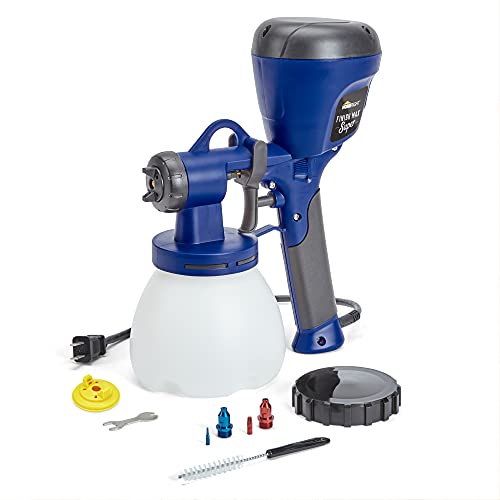
Best for small-to-medium DIY projects like furniture refinishing, decks, and cabinets. The HomeRight unit offers adjustable settings to match various materials, including horizontal, vertical, and round spray patterns, plus a material flow control knob for precise output. Its 450-watt motor provides ample power for latex paints, stains, enamels, and sealers. Pick this if you want a balanced mix of portability and finish quality. Limitation: larger paint jobs may require longer spray times due to material flow rates.
Graco Magnum X7 Cart Airless Sprayer

Best for larger, more frequent painting projects where spraying directly from a paint bucket is advantageous. The Graco Magnum X7 features a fully adjustable paint flow and a RAC IV SwitchTip for easy unclogging, plus a stainless steel piston pump that allows spraying unthinned paints at high pressure. This model is well-suited for prep-heavy residential projects like exterior walls, fencing, and larger furniture builds. Caution: higher price and setup complexity may not suit casual hobbyists.
TILSWALL Shark 800 HVLP Sprayer

Best for detailed finishes on furniture and cabinetry. The Shark 800 from TILSWALL uses four brass nozzles (1mm–3mm) and three spray modes (horizontal oval, vertical oval, round), with a side-feed design that reduces the need to tilt or move paint cans. It emphasizes proper paint viscosity, quick cleanup, and consistent atomization. Choose this for tight control and efficient use of coatings. Caution: side-feed design can require careful alignment when reloading during longer sessions.
ENDOZER Gravity Feed HVLP Spray Gun Set

Best for professional-like results and precise coating control. The ENDOZER gravity feed set includes 1.4, 1.7, and 2.0 mm stainless steel nozzles with a 20 oz (600 ml) gravity cup. A brass hood, 15-hole atomization design, and a 1/4″ NPT inlet optimize uniform spray quality. Ideal for automotive finishes, primers, clears, lacquers, and detailed top coats. Limitation: not recommended for latex paints or heavy viscosities without thinning.
Buying Guide: Key Considerations For The Right Air Pump Paint Sprayer
- Project size and material compatibility: For large volumes or thick paints (enamels, primers), prefer higher wattage or nozzle options that handle viscosity well. For detail work, smaller nozzles and precise fan patterns are beneficial.
- Valve and nozzle options: Look for models offering multiple nozzle sizes and spray patterns to cover furniture, walls, fences, and cabinets without swapping equipment.
- Spray pattern control: Horizontal and vertical patterns provide broader coverage, while circular or oval patterns are useful for corners and edges.
- Ease of cleaning: A built-in cleaning function, removable nozzles, and a cleaning brush or needle help extend tool life and reduce downtime between jobs.
- Portability and setup: Gravity-fed cups eliminate the need for separate paint buckets, while cart systems benefit larger projects. Consider noise level, cord length, and ergonomic design.
- Maintenance requirements: Regular thinning practices, correct viscosity testing, and prompt cleaning reduce clogs and ensure consistent atomization.
- Best-use scenarios: For DIYers finishing furniture and cabinets, a versatile HVLP with multiple nozzles is ideal. For pro or frequent use, a gravity-fed and adjustable high-pressure unit offers more control and efficiency.
FAQ
- What is the difference between HVLP and airless sprayers? HVLP sprayers use lower pressure for fine atomization and reduced overspray, ideal for detailed finishes. Airless sprayers push paint under high pressure, suitable for large areas but can create more overspray and texture.
- Do I need to thin paint before spraying? Yes, many sprayers require proper viscosity. Use a thinning guide or viscosity cup and test spray on a sample surface before applying to the project.
- Can I spray latex paint with these sprayers? Some models are suitable after thinning and proper nozzle selection. Check the manufacturer’s guidance for each model to ensure compatibility with latex.
- How do I prevent clogs and maintain spray quality? Clean the nozzle and passageways after use, filter paints if needed, and thin coatings according to the recommended viscosity. Regular maintenance extends service life.
- Is a larger nozzle better for big surfaces? Larger nozzles cover wider areas faster but may sacrifice detail. Choose based on project type and desired finish quality.
- Which sprayer is best for beginners? A model with multiple nozzle sizes, simple assembly, and integrated cleaning features tends to be easiest for new users.