If you’re looking for waterproofing paint for masonry, these products help protect concrete, brick, and block walls from moisture intrusion. This guide targets homeowners and DIYers tackling basements, foundations, and exterior masonry alike. Each option is evaluated for best use cases, durability, and application practicality to help you choose confidently.
Summary table of chosen products:
| Product | Best For | Key Benefit | Limitations |
|---|---|---|---|
| KILZ Basement and Masonry Waterproofing Paint | Basements and exterior walls | Nanotechnology water barrier; alkali-resistant | Not for floors or active leaks |
| INSL-X WaterBlock Acrylic Masonry Waterproofer | Fast-drying interior/exterior walls | High alkali resistance; versatile | Surface prep required for best results |
| Zinsser WaterTite General Purpose | Damp basements and cellars | Resists water pressure; economical | Primer not included |
| Matvio Black Liquid Rubber | Foundations and flat roofs | Industrial-grade membrane; flexible | Longer cure time; odor possible |
| KILZ Self-Priming Masonry, Stucco & Brick | Ready-to-use interior/exterior | Self-priming; strong hiding power | Not suitable for heavy water leaks |
KILZ Basement and Masonry Waterproofing Paint
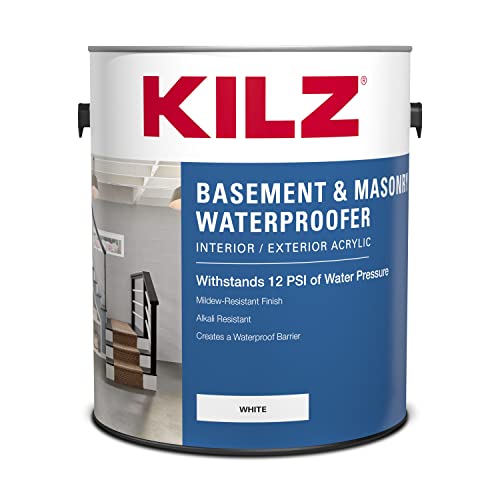
Product overview: KILZ waterproofing paint uses nanotechnology to form a strong water barrier. It blocks up to 12 PSI of water pressure, suitable for interior and exterior masonry surfaces such as basement walls, stucco, brick, and concrete blocks. It is alkali-resistant to withstand high-moisture environments. For below-grade use, fill cracks with hydraulic cement prior to painting. Not recommended for floors or active leaks.
Best for: Basements and exterior masonry projects where a durable water barrier is needed and surfaces are not actively leaking. The product is ideal for walls that experience high moisture but are not continuously soaked.
Limitations: Avoid use on floors or in areas with active water leaks. Proper crack repair is essential before application to ensure a clean seal.
INSL-X WaterBlock Acrylic Masonry Waterproofer
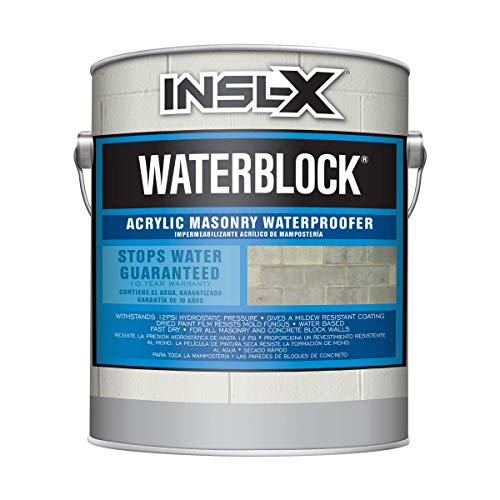
Product overview: WaterBlock is a water-based coating designed for sealing vertical interior and exterior concrete walls. It’s fast-drying and suitable for basements, foundations, retaining walls, cinder blocks, stucco, brick, and masonry. It offers high alkali resistance up to pH 13, which helps withstand harsh masonry environments.
Best for: Quick-drying projects where interior or exterior masonry needs robust alkali resistance and a clean white finish.
Limitations: Surface prep can influence adhesion; ensure proper cleaning and priming of rough or dusty surfaces for best results.
Zinsser WaterTite General Purpose

Product overview: WaterTite is a general-purpose waterproofing paint designed for basements, cellars, and damp areas. It can cover up to about 250 sq. ft. per gallon depending on porosity and method, and it resists up to 10 lbs. of water pressure. This option provides a solid protective layer with a straightforward application.
Best for: Budget-friendly basement or damp area projects where a simple, wipe-on solution is needed.
Limitations: Coverage varies with surface porosity, and higher water pressure areas may require additional coats or alternative methods.
Matvio Black Liquid Rubber

Product overview: Matvio’s Black Liquid Rubber is an industrial-grade waterproof coating designed for foundations, flat roofs, and surfaces prone to severe moisture. It forms a thick elastomeric membrane that bonds to concrete, masonry, wood, and metal. Its UV resistance helps maintain flexibility through freeze-thaw cycles.
Best for: Deep waterproofing on foundations or flat roofs where a robust, flexible membrane is needed to resist cracking and water intrusion.
Limitations: It’s an odor-prone, thicker coating that may require longer cure time and proper ventilation during application.
KILZ Self-Priming Masonry, Stucco & Brick

Product overview: This KILZ acrylic latex, water-based paint is self-priming and designed for interior or exterior use on masonry, stucco, brick, and textured surfaces. It offers good hiding properties, adhesion, and water repellency. It is alkali-resistant up to pH 12 and can be rolled, brushed, or sprayed on.
Best for: Projects requiring a ready-to-use paint with strong hiding power and simple cleanup, especially on rough or textured masonry surfaces.
Limitations: While self-priming, it may not be suitable where heavy efflorescence or active leaks are present, and multiple coats may be needed for high-porosity surfaces.
Buying Guide: Key Considerations For Choosing Masonry Waterproof Paint
- Surface type and condition: Exterior brick, cinder block, and concrete walls require formulations with high adhesion, alkali resistance, and moisture tolerance. For below-grade or damp interiors, prioritize products designed to resist hydrostatic pressure.
- Water exposure level: If you face continuous or intense moisture, select membranes or coatings designed for higher water pressure and long-term durability (e.g., elastomeric or nanotech barriers).
- Drying time and application: Fast-drying formulas are ideal for DIY projects with limited downtime. Some products require longer cure times or multiple coats for optimal performance.
- Primer and compatibility: Some paints are self-priming; others benefit from a dedicated primer on porous or damaged surfaces. Check compatibility with existing finishes.
- Finish and aesthetics: If appearance matters, choose a finish with a consistent white or neutral tone and a durable, easy-to-clean surface suitable for walls that may contact moisture.
- Health and safety: Consider low-VOC formulations for indoor work and follow ventilation and PPE recommendations during application.
- Maintenance: Look for coatings that resist alkali buildup and mildew, reducing cleaning frequency and improving longevity in basements and exterior walls.
Frequently Asked Questions
- What type of paint is best for basement walls? Look for waterproofing paints formulated for masonry that resist water pressure, provide alkali resistance, and suit interior or exterior use depending on location.
- Do these paints require a primer? Some are self-priming, while others benefit from a dedicated masonry primer on porous or damaged surfaces. Follow product guidelines for prep.
- Can these products seal active leaks? Most are not designed to seal active leaks; repair leaks and cracks with appropriate materials before painting for best results.
- How long does waterproofing paint last? Durability depends on surface prep, exposure, and climate. High-quality elastomeric or nanotech coatings typically offer longer-term protection in harsh conditions.
- Is breathable waterproofer better for masonry? Breathable formulations allow moisture to escape from masonry while blocking water ingress, which helps prevent damp buildup.
- Can I apply these products over existing paint? Yes, if surfaces are clean, sound, and dry. Heavily peeling coatings should be removed or primed according to product instructions.