Looking to add authentic wood textures to walls, furniture, or décor projects without hiring a pro? This guide highlights top wood graining tools that can help you achieve convincing wood grain patterns with paint. Each product is selected for different needs—beginner-friendly kits, long-lasting professional tools, and versatile sets that cover multiple textures. Best for DIY beginners, hobby decorators, and intermediate tainters who want consistent results.
| Product | Best For | Why It Stands Out |
|---|---|---|
| LUTQ Wood Grain Tool | Beginners to intermediate | Ergonomic handle, natural woodgrain maker, durable rubber construction for steady results. |
| XDONEF Wood Grain Tool 11pc Set | Comprehensive projects | Extensive set with multiple sizes, great value, versatile patterns for various surfaces. |
| lenpestia 4 Pieces Wood Graining Tool | Value + versatility | Rubber tools with good elasticity, easy to learn, simple workflow for practice. |
| ALLWAY GT3 3-Piece Wood Graining Set | Cabinets, furniture, crafts | Classic two-tool approach for knots and grain texture, straightforward use. |
| Kryslanix 5 Pack Wood Grain Tool | Multi-pattern projects | Five rollers give a range of grain patterns, good long-term value for repeated projects. |
LUTQ Wood Grain Tool – Natural Woodgrain Maker

The LUTQ Wood Grain Tool is designed for authentic wood textures with an emphasis on ease of use. Made of premium rubber, this tool emphasizes durability and long-lasting performance in wood graining tasks. The ergonomic handle supports controlled movements, making it a practical choice for both beginners and experienced painters. Best for applying consistent grain lines on walls or furniture where a natural look is the goal. Potential limitation: might require a stable topcoat technique to ensure grain patterns appear clearly as surfaces dry.
XDONEF Wood Grain Tool Set, 11 Pcs

This 11-piece set from XDONEF provides a comprehensive collection of rollers, rockers, and brushes for varied grain textures. The rubber wood grain tools offer elasticity and surface protection, while included brushes help finish coats. Best for projects requiring multiple textures across walls, furniture, and accents. Better for those who want to cover many angles and sizes without buying individual tools. Limitation: the larger kit may be more than needed for small projects.
lenpestia 4 Pieces Wood Graining Tool Kit

lenpestia’s 4-piece kit focuses on core grain tools with a rubber construction that resists deformation and wear. The kit is designed for easy handling and a natural-looking woodgrain finish on walls and furniture. Best for hobbyists who want a straightforward setup and clear grain patterns. Caution: users should wait for primer and coats to dry properly to ensure grain lines photograph well and don’t blur on the final topcoat.
ALLWAY GT3 3-Piece Wood Graining Set
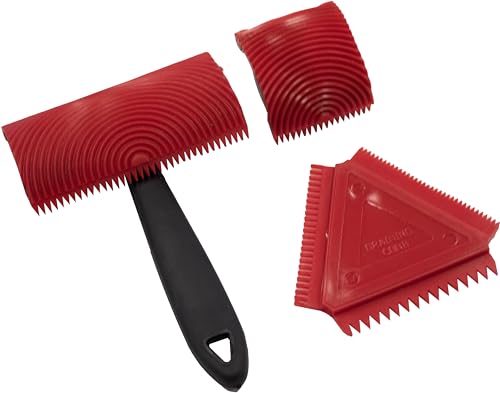
ALLWAY GT3 emphasizes versatility in a compact 3-piece design. It supports creating a variety of wood patterns, including knots, by alternating the comb and curved tools after applying glaze or stain. Best for flat surfaces like furniture, cabinets, and craft projects where multiple grain styles are desired. Choose this if you want a reliable starter set with proven pattern options. Limitation: fewer components mean you may rely more on technique to achieve varied textures.
Kryslanix 5 Pack Wood Grain Tool

The Kryslanix 5-pack offers a set of five rollers designed to create a range of wood grain patterns. The set supports longer-term projects with multiple tool sizes, allowing for detailed grain textures on walls and floors alike. Best for multi-pattern projects and users who want flexibility across surfaces. Limitation: the assortment may include overlapping sizes that are less efficient for very small areas.
Buying Guide: Wood Graining Tool Considerations
- What surface are you painting? Walls, furniture, or decorative accents may require different roller widths and tool shapes.
- Material quality matters. Look for rubber tools with good elasticity to avoid deformation and surface damage.
- Pattern variety versus simplicity. Beginners might prefer sets with a few essential shapes, while seasoned painters benefit from larger kits with multiple sizes.
- Drying sequence. Most wood grain effects rely on working with a wet-on-wet approach, so plan coats to maintain workable surfaces.
- Grip and ergonomics. An ergonomic handle reduces fatigue during longer sessions and improves control for intricate grain lines.
Frequently Asked Questions
- What is the best wood grain tool for beginners? A simple 2-3 piece set with a main roller and a couple of texture tools is ideal for learning grain patterns and getting consistent results.
- Do wood grain tools work on all paints? They work best with textured and water-based paints; ensure your base coat is dry before applying the grain texture.
- Should I seal wood grain projects with a top coat? Yes, apply a protective top coat after the grain pattern dries to preserve the texture and color.
- Can I reuse these tools on different projects? Yes, rubber wood grain tools are generally reusable, but clean them after each use to prevent residue buildup.
- How do I achieve realistic knots in the grain? Use a curved tool after applying glaze or stain and rock or drag it gently to form knot shapes.
- What mistakes should I avoid? Avoid over-wetting the surface, which can cause blurred grain lines, and skip base coat preparation for uneven results.
Summary: For diverse wood grain needs, LUTQ and Kryslanix provide flexible options for multiple textures, while XDONEF’s larger set covers a broad range of project types. Lenpestia and ALLWAY offer approachable kits focused on practical results and reliable performance. When selecting, consider surface type, the number of textures you want, and your comfort with handling larger tool sets. This guidance helps you match a tool kit to your painting goals and avoid overinvesting in unnecessary components.