Direct answer: gray fence stain colors can protect wood from UV damage, mildew, and moisture while delivering a cohesive, modern look. This guide highlights five top gray options that balance coverage, durability, and ease of application for fences and related outdoor wood surfaces. It’s ideal for homeowners seeking low-maintenance finishes or professionals selecting reliable, long-lasting products. The selections below are best for different needs, from opaque protection to semi-transparent color that shows grain.
Summary table of chosen products
| Product | Best For | Finish Type | Top Benefit |
|---|---|---|---|
| #1 Deck Premium Advanced Solid Color Stain (Gray) | Decks and fences needing complete gray coverage | Opaque solid | Full hide of grain with UV protection |
| #1 Deck Premium Wood Fence Stain and Sealer (Gray) | Fences needing color while blocking graying | Semi-transparent | Color with sealant protection |
| Cabot Driftwood Gray Solid Color Decking Stain | High-traffic areas needing durable color | Solid color | Maximum pigmentation and water repellence |
| DEFY Solid Color SG-Solid (Gray) | New or restored decks and fencing with a modern gray look | Opaque solid | Advanced UV protection and long-lasting color |
| DWIL Wood Stain And Sealer In One (Bleached Gray) | Budget-friendly projects needing color and seal in one | Semi-transparent | Deep penetration with quick drying |
#1 Deck Premium Advanced Solid Color Stain and Sealer in Gray

Best for: surfaces requiring complete color coverage with an opaque finish. Why selected: this product hides the natural grain for a uniform gray look while delivering UV protection to prevent fading, graying, and mildew. It is a dual-action formula designed to penetrate wood pores for durability and can be applied over existing solid stains that still adhere well. Caution: may require more effort to remove or recoat if adhesion is compromised by old finishes.
#1 Deck Premium Wood Fence Stain and Sealer (Gray)

Best for: fences that need color while protecting against color fade and graying. Why selected: this water-based fence stain stabilizes color with UV protection and works on common softwoods like pine and cedar. It’s suitable for spray, brush, or roller application. Caution: hardwoods may require more coats for consistent coverage.
Cabot Driftwood Gray Solid Color Decking Stain

Best for: high-traffic decks and fences where a durable, opaque gray is desired. Why selected: Cabot provides a maximum-pigmented solid formula with water repellency, helping to resist wear and weather impacts. Caution: the opacity may obscure natural wood texture, which might not suit fans of visible grain.
DEFY Solid Color SG-Solid Gray
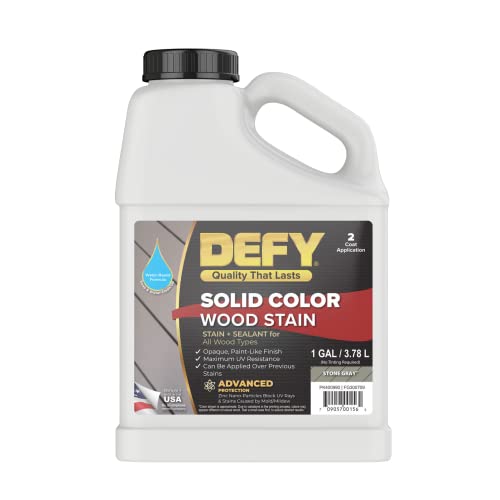
Best for: exterior wood with a modern gray look and strong UV resistance. Why selected: the zinc nano-particle UV protection helps maintain vibrancy, while the solid formula hides surface imperfections. Caution: may require surface preparation if the wood is heavily weathered.
SaverSystems Semi-Transparent Outdoor Stain in Cedar Gray
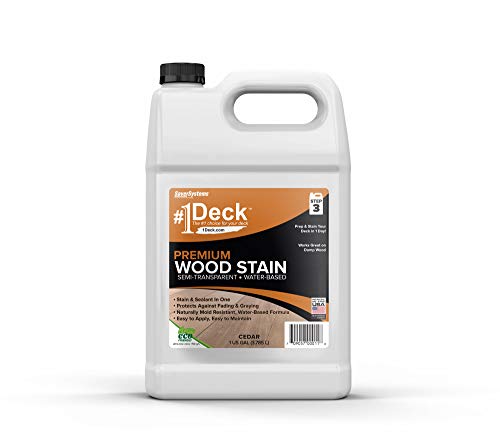
Best for: projects where you want the natural wood grain to show through while adding a gray tone. Why selected: this stain provides UV protection and a durable seal, with a blend that preserves the wood’s natural look. Caution: semi-transparent finishes require more frequent maintenance than opaque coatings to retain color depth.
DWIL Wood Stain And Sealer In One (Bleached Gray)

Best for: budget-minded projects needing both color and sealing in one coat. Why selected: DWIL combines staining and sealing to simplify upkeep while providing water resistance and color. Caution: may show more subtle gray tones, which could require a second coat for deeper color in some woods.
Buying Guide: Key Considerations For Gray Fence Stains
- Finish range: Do you want full opaque coverage or a semi-transparent finish that shows grain? Opaque hides more but may require more maintenance over time.
- UV protection: Look for UV-blocking additives (like zinc nano-particles) to minimize fading and graying in direct sun.
- Wood type compatibility: Softwoods (pines, cedars) often take stain differently than hardwoods. Some formulas are designed specifically for softwoods.
- Water-based vs oil-based: Water-based stains tend to clean up easily and have lower VOCs, while oil-based options can offer deeper penetration and longer life in harsh climates.
- Application method: Consider whether you’ll spray, brush, or roll. Some products are optimized for one or more methods and drying times vary.
- Maintenance interval: Semi-transparent finishes typically require re-coating sooner than solid colors to maintain the same look.
- Surface preparation: Weathered or milled wood may require cleaning, sanding, or priming for best adhesion and color uniformity.
FAQ
- What gray fence stain should I choose for maximum protection?
– A solid color stain with UV protection generally offers the strongest seal against fading and graying. - Is semi-transparent better for fence longevity?
– Semi-transparent stains preserve wood grain and can be easier to refresh, but may require more frequent re-coating than solid colors. - Can I apply these stains over an existing finish?
– Some products are formulated to be applied over existing finishes with good adhesion; check label guidance on compatibility. - How important is UV protection in gray stains?
– Very important; UV resistance slows color fading and maintains an even gray tone over time. - Will gray stains cause peeling or cracking?
– Proper surface prep and following product instructions minimize peeling and cracking but extreme weather or moisture exposure can still impact durability. - Are water-based stains more eco-friendly?
– Generally yes; they typically have lower VOC content and easier cleanup, which can be better for environments and indoor air quality.