Answering the need for durable, moisture-resistant coatings, this guide highlights five concrete wall coating products that perform well on concrete, masonry, and basement walls. It’s ideal for homeowners tackling leaks, cracks, or wear, as well as contractors seeking reliable sealants and finishes. The top picks are best for different scenarios: basement walls, outdoor masonry, and high-traffic garages. The following summary table helps compare key points quickly.
| Product | Best For | Primary Use | Notable Limitation |
|---|---|---|---|
| Ames Block & Wall Liquid Rubber | Basements and foundations | Waterproofing sealer | White color may require painting over for aesthetics |
| PC-Masonry Epoxy Adhesive Paste | Repairing cracks and gaps | Two-part epoxy repair | Works best on properly prepared surfaces |
| KILZ Over Armor Textured Solid Coating | Old, weathered wood and concrete | Thick resurfacer | Primarily exterior use; texture hides underlying flaws |
| KILZ Basement & Masonry Waterproofing Paint | Basement and masonry walls | Nanotechnology waterproof paint | Not for floors or actively leaking walls |
| Flex Paste Waterproof Putty | Small repairs and gaps | Waterproof sealant putty | Best for localized fixes rather than large surfaces |
Ames Block & Wall Liquid Rubber Waterproofer
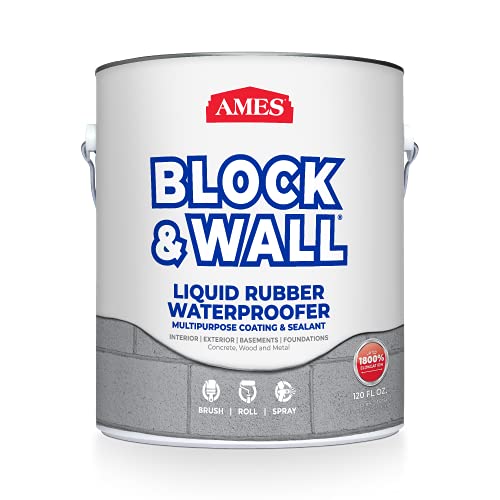
Best for concrete basements and foundation walls that need a dependable water barrier. Ames Block & Wall is a liquid rubber coating designed to seal against moisture and reduce water intrusion. The product is white, weighs about 9.25 lb, and is produced in the USA with a composition that supports multi-surface use on concrete and masonry.
Who it’s best for: homeowners seeking a straightforward, brush- or roller-applied sealant for below-grade walls; small-to-medium interior or exterior concrete surfaces where a breathable yet watertight film is desired.
Why selected: It provides a flexible rubberized layer that can adapt to wall movement, helping to protect foundations and basements from dampness. The waterproofing properties make it a practical topcoat or sealant in mixed humidity environments.
Caution: Color is white, which may require an additional coat of paint for a uniform appearance in finished spaces. Surface preparation and cure conditions are important for best adhesion.
PC-Masonry Epoxy Adhesive Paste
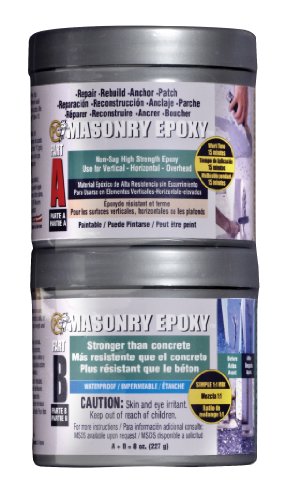
Two-part epoxy paste designed to repair missing concrete and fill cracks in deteriorating masonry. It resists moisture and can be applied on wet or dry surfaces, suitable for both indoor and outdoor use with a wide application and service temperature range.
Best for: repairs where structural gaps, cracks, or spalls are present and need a solid, moisture-resistant fix before applying decorative coatings or paint.
Why selected: The epoxy formulation provides a robust bond and moisture resistance, helping restore integrity to masonry walls and preventing further deterioration.
Caution: Proper mixing and surface preparation are essential to achieve a durable repair; not a decorative finish on its own.
KILZ Over Armor Textured Solid Coating

This thick, textured resurfacer is ideal for old, weathered surfaces looking to regain a renewed appearance. It bridges cracks, hides imperfections, and creates a refreshed finish on wood, concrete, and composite surfaces, with a focus on exterior applications where appearances matter.
Best for: restoring worn decks, porches, or concrete patios where visible texture and a durable finish matter more than a perfectly smooth surface.
Why selected: Its thick formula acts as both a repair and aesthetic solution, providing a protective, long-lasting finish that helps address weathered surfaces.
Caution: Not primarily a waterproofing barrier; use a dedicated sealant before applying on surfaces with active leaks or high moisture movement.
KILZ Basement and Masonry Waterproofing Paint
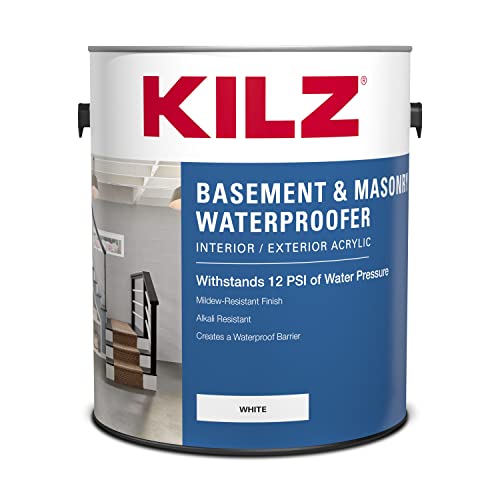
A water-blocking paint designed for interior and exterior concrete, brick, and masonry walls. It features nanotechnology-based waterproofing to resist water pressure and helps protect basement walls and other masonry surfaces from infiltration. It is suited for below-grade applications when properly prepped.
Best for: basements and masonry walls that require a durable protective layer against moisture and staining, especially in damp climates.
Why selected: The nanotechnology approach provides a modern water barrier, balancing moisture resistance with a decorative finish that can be used in many living or working spaces.
Caution: Not intended for use on floors or on walls with active, ongoing leaks; ensure proper crack filling and surface preparation before applying.
Flex Paste Waterproof Putty

Waterproof paste putty designed to seal gaps, cracks, and holes in walls, concrete, and roofs. It forms a flexible, rubberized barrier that can even set underwater, making it suitable for submerged or wet-in-wet repairs and for use on various surfaces including EPDM and concrete.
Best for: small, targeted repairs where water infiltration is localized, or where a flexible seal is needed around joints and penetrations.
Why selected: Its underwater-curing capability and flexible finish help address leaks in challenging areas without the need for heavy resurfacing.
Caution: Not intended as a full-wall coating; use for patching and sealing specific trouble spots rather than entire surface protection.
Buying Guide: Concrete Wall Coatings and Repairs
- Surface condition: Assess cracks, moisture, and porosity. Epoxies work well for structural repairs, while paints and coatings provide surface protection and moisture resistance.
- Moisture management: Choose products with proven waterproofing or moisture-blocking properties for basements and exterior walls. Consider primers or sealants to improve adhesion on damp surfaces.
- Finish vs. protection: Textured resurfacers and white waterproofers offer both protection and aesthetics but may require additional topcoats for color uniformity or UV resistance.
- Application environment: Interior vs. exterior use, exposure to weather, and temperature ranges influence product selection and curing times.
- Repair strategy: For large cracks or structural concerns, combine epoxy repairs with waterproof coatings for best long-term performance.
- Safety and compatibility: Verify compatibility with existing coatings and substrates. Follow ventilation and curing guidelines for indoor uses.
FAQ
- Q: Which product is best for sealing a damp basement wall? A: KILZ Basement and Masonry Waterproofing Paint offers a nanotechnology-based water barrier suitable for basement walls, provided cracks are properly sealed first.
- Q: Can I apply these coatings directly over concrete without primer? A: Some products can be applied directly, but surface prep is crucial. Epoxies and waterproof paints often require clean, dry, and slightly primed surfaces for optimal adhesion.
- Q: Are these coatings breathable? A: Some products are designed to form a protective membrane while allowing limited breathability; check product specs for moisture transfer characteristics.
- Q: What is the best option for exterior deck resurfacing? A: KILZ Over Armor Textured Solid Coating is designed for wood and concrete surfaces to restore wear and provide a durable finish with a thick, textured layer.
- Q: Should I use epoxy repair on wet concrete? A: Epoxy adhesives like PC-Masonry can be used on wet surfaces, but follow manufacturer guidance and ensure proper curing conditions for a durable repair.
- Q: Do these products stop leaks completely? A: They reduce water intrusion and improve protection, but for active leaks, address the source and consider combining coatings with proper drainage and sealing practices.