To get vibrant, guitar-friendly finishes, choose wood dyes that offer even color penetration, low odor, and compatibility with common guitar finishes. This guide presents five top picks best for guitar work, including stain powders and liquid dyes. Each option suits different players: hobbyists seeking easy mixing, luthiers needing deep color control, and DIY enthusiasts working on acoustic or electric guitars.
| Product | Best For | Key Benefit |
|---|---|---|
| Ninesung Purple Wood Stain | Colorful, outdoor or indoor guitar components | Fast drying with strong color payoff |
| ColorTone Black Concentrated Liquid Stain | Precise color control and grain enhancement | Highly concentrated, versatile mixing |
| TransTint Dyes, Black, 2oz | Professional-grade toning and grain clarity | Clear, grain-enhancing color |
| DWIL Water Based Wood Stain | One-coat finish and low odor for interiors and instruments | Fast drying, low odor, safe |
| Wood Dye – Aniline Dye 5 Color Kit | Vibrant color kit for base stains | Eco-friendly, five exotic colors |
Product 1: Ninesung Purple Wood Stain

Best for: guitar builders or players seeking a vivid purple finish on wooden components or guitar furniture. This dye powder is described as fast-drying and highly concentrated, delivering strong color penetration on indoor and outdoor wood surfaces. It’s suitable when you want a bold, unique look without multiple coats. The product emphasizes easy spreading and even coverage, which helps avoid blotches during staining. A potential limitation is that color depth may require multiple layers for darker tones, depending on species and grain.
Product 2: ColorTone Black Concentrated Liquid Stain

Best for: guitarists aiming for deep, authentic black tones that enhance grain detail without muddying. This concentrate is designed to be flexible: mix with alcohol or water for wipe-on staining or blend into clear finishes for tonal control. It’s ideal when precise color adjustment is needed to match hardware, fretboards, or contrasting woods. Use caution with very light woods, as black can appear stark if too thick; start with small test swatches.
Product 3: TransTint Dyes, Black, 2oz

Best for: professionals and serious hobbyists who want precise, professional-grade color control with virtually no grain distortion. TransTint dyes are highly concentrated and compatible with water, alcohol, shellac, lacquer, and various finish systems, making them versatile for guitars with multiple finishing layers. A key note is that a few drops go a long way, so handling with small measurements is essential to avoid over-darkening. This dye excels for clean, grain-enhancing results.
Product 4: DWIL Water Based Wood Stain

Best for: guitar projects where a natural, one-coat finish with low odor is preferred. This water-based stain emphasizes fast drying and ease of use, suitable for indoor and outdoor furniture and paneling. It provides a matte finish texture with good color depth. The main limitation is that color density depends on wood porosity; rough or very resinous woods may require extra steps or additional coats for uniformity.
Product 5: Wood Dye – Aniline Dye 5 Color Kit
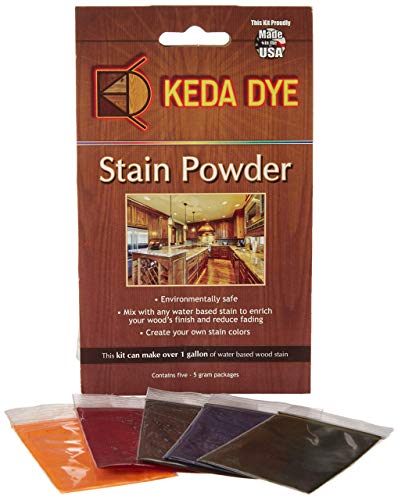
Best for: guitar makers who want a versatile color toolkit with five exotic tones in one kit. This eco-friendly dye set can produce up to five quarts of liquid stain per kit, enabling broad color experiments on guitar bodies, backs, or necks. The kit’s strength lies in vibrant, punchy colors with minimal environmental impact. A caveat is that the kit is color-focused, so pairing with compatible sealants or topcoats is necessary to achieve the final finish you want.
Buying Guide: Wood Dye For Guitars
- What finish are you aiming for? Liquid dyes often provide deeper color and grain enhancement, while powder dyes can be mixed for custom strengths. Choose based on whether you want a bold color or a subtle, natural look.
- Wood compatibility: Guitars use varied woods (maple, mahogany, rosewood, spruce). Test color on a scrap piece that matches your instrument to judge penetration and grain rendering.
- Mixing and compatibility: Check whether the dye should be mixed with water, alcohol, or can be added to lacquers or clear finishes. This affects compatibility with your current guitar finish.
- Drying time and odor: For in-home studios, low-odor water-based dyes reduce workspace disruption and allow quicker workflow between steps.
- Grain enhancement: Some dyes emphasize grain more than others. If you want strong grain contrast on a light wood, consider products marketed for grain highlighting.
- Safety and eco-friendliness: Look for non-toxic formulas and low-VOC options when finishing instruments to protect players and studios.
- Application method: Wipe-on, brush, or spray applications have different levels of control. Choose according to skill, equipment, and desired finish uniformity.
Frequently Asked Questions
- Can dyes affect the resonance of a guitar? Dyes primarily affect surface color and grain appearance; proper sealing and finishing steps preserve resonance.
- Are water-based dyes safe for fretboards? Yes, many water-based dyes are low odor and suitable for necks and fretboards when used with appropriate sealants.
- Should I test dye on a scrap piece before applying to the guitar? Yes, test on a visually similar off-cut or scrap wood to gauge color and penetration.
- Is it better to use powder or liquid dyes for guitars? Powder dyes offer strong color with water activation and are economical for large batches, while liquid dyes provide direct use and easier blending with finishes.
- Do dyes require a topcoat after staining? Yes, most guitar finishes require a compatible topcoat to protect color and ensure durability.
- Can dyes be mixed with polyurethane or lacquer finishes? Many dyes are designed to mix with various finish systems; verify compatibility with the specific finish you plan to use.
Summary: For guitar projects, the Ninesung Purple and Red variants offer bold color choices with fast drying, while ColorTone and TransTint provide professional-grade control for precise toning. DWIL’s water-based option supports a natural look with low odor, and the Aniline Dye Kit offers a multi-color toolkit for flexible experimentation. When selecting, match dye type to your wood, preferred finish, and workflow tempo to achieve the best instrument-focused results.