If you’re looking to refresh concrete around a pool, you want products that deliver color, durability, and water resistance without harsh chemicals. This guide highlights five Amazon options that are well-suited for staining concrete around pools, along with an objective buying guide and FAQs to help you choose confidently. The top picks include stain-and-seal options, penetrating sealers, and practical stain-removal tools for maintenance between treatments. Ideal buyers include DIY homeowners, pool area renovators, and professionals seeking low-odor, long-lasting results.
| Product | Best For | Key Benefit |
|---|---|---|
| LastiSeal Concrete Stain & Sealer | Homeowners wanting color and protection in one step | Water-based, no odor, deep-penetrating with long waterproofing warranty |
| CC Concrete Coatings Vivid Acid Stain for Concrete | Colorful, variegated looks | Variegated color range with penetrating stain |
| DOMINATOR Concrete Sealer for Driveway | Natural look, long-lasting protection | Water-based, zero sheen, invisible protection |
| Pumice Stone (Pool Blok) for Tile & Concrete | Maintenance and rust/calcium stain removal | Natural pumice abrasion for spot cleaning |
| ATIE Pool Pumice Stone with EZ-Clip Handle | Easy, quick spot cleaning | Clip handle, works fast on rust and calcium deposits |
Tip: For pool surroundings, focus on products that resist water exposure, stay UV-stable, and minimize slip risk. Always test a small area first and follow manufacturer instructions for best results around wet surfaces.
LastiSeal Concrete Stain & Sealer

Brand: RadonSeal
Features: Deep-penetrating concrete sealer backed with a 15-year waterproofing warranty, an attractive variegated look—like acid staining, but with more colors and no acids, water-based for an easy and safe spray-on application. UV-resistant. No odor.
Best for: DIY homeowners who want a combined stain and sealer with low odor and easy spray application for exterior pool decks or interior pool areas. It provides color while protecting against water intrusion. Choose this if you prefer a single-step product and minimal ventilation concerns. Limitation: the final color can vary with application conditions and concrete porosity, so test a small area first.
U.S. Pool Supply Pool Cleaning Pumice Stone (3 Pack)

Brand: U.S. Pool Supply
Features: 3 pool cleaning pumice stones with standard 1-1/4″ diameter pool telescopic pole handles. Use to remove rust stains on concrete, surface lime, and calcium build-up from tiles. Great for cleaning stained and scaled surfaces. Scrub debris off walls, floors, steps, and corners.
Best for: Maintenance after staining; ideal for removing tough stains and mineral deposits around pool edges and tile lines. Better for removing existing surface staining before applying a stain or sealer. Caution: Abrasive stones can scratch very delicate surfaces; test on a hidden area first.
LFUTARI 8 Pcs Pool Pumice Stone

Brand: LFUTARI
Features: 8 pieces of pumice stones in two sizes for cleaning pools, spas, tiles, grout, and concrete. Made from odorless, non-toxic pumice; safe for people and water. Effective for rust, mineral buildup, lime, and calcium stains.
Best for: Budget-friendly maintenance and spot cleaning of pool deck grout and tile lines. Choose this if you prefer a set with multiple sizes for different areas. Limitation: Pumice-based cleaning may require follow-up sealing to maintain a uniform appearance.
ATIE Pool Pumice Stone with EZ-Clip Handle

Brand: Pool Supply Town
Features: Pumice stone with EZ-Clip Handle for use with 1-1/4″ pool telescopic pole. Works fast as a surface lime remover; cleans rust marks, algae, and leaf stains on pool tile and plaster. Ideal spot cleaner for hard-to-reach areas.
Best for: Quick, one-handed cleaning around pool edges and tiles. Avoid if you need heavy-duty chemical alternative; pumice alone may not remove deeply ingrained stains without abrasion.
Pumie 1-Pack Pumice Stone for Pool Tile Cleaning
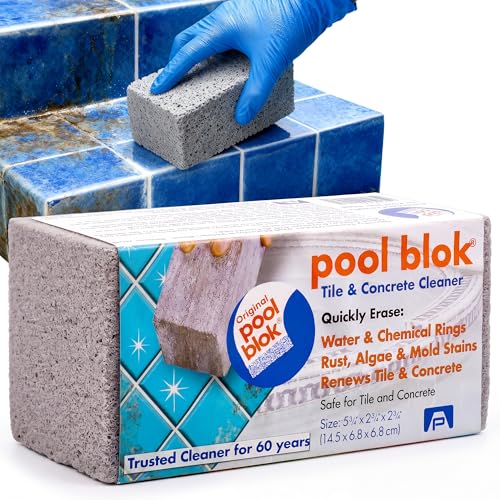
Brand: Pool Blok
Features: FAST TILE RESTORE—breaks up lime, rust, and mineral deposits for cleaner waterline; no harsh chemicals; floats for spot cleaning; designed for tile, plaster, and grout.
Best for: Spot cleaning of calcium buildup along pool tile lines and waterlines without adding chemicals. Limitation: Not a stain product; best used prior to sealing or staining to ensure a uniform surface.
Buying Guide: Concrete Staining Around a Pool
What to consider when choosing a stain and sealer
- Water exposure and UV resistance: Pool areas face constant moisture and sun. Look for products with strong waterproofing and UV stability to prevent fading and peeling.
- Color range and appearance: Stains vary from acid-appearance variants to water-based options that mimic acid stains without harsh chemicals. Consider the look you want (variegated, solid, natural) and test color in a small area.
- Penetration vs. film-forming: Penetrating sealers protect from within the concrete without leaving a slippery film, which is important for wet pool decks. Film-forming sealers may yellow or peel over time.
- odor and safety: Water-based formulas tend to have little to no odor and are easier to apply in outdoor areas. If interior pool rooms are involved, odor considerations matter for occupants.
- Maintenance: Some products offer long warranties and heavy-duty protection, reducing maintenance frequency. Others are easier to reapply when needed but may require additional prep work.
Application tips for pool surroundings
- Prepare the surface by cleaning and allowing it to dry fully before applying stain or sealer.
- Test a hidden area to verify color, absorption, and finish before full application.
- Apply in moderate temperatures with good ventilation; follow safety guidelines for any chemical components.
- Seal porous concrete to minimize water intrusion and reduce stain migration near water edges.
Maintenance and upkeep
- Regularly clean surfaces with non-abrasive cleaners to preserve color and finish.
- Inspect sealing every 1–3 years depending on traffic, weather, and wear around the pool.
- Use appropriate pumice stones or non-abrasive tools for maintenance to avoid surface damage when cleaning stains.
Frequently Asked Questions
Is staining concrete around a pool a good idea?
Yes, it can enhance appearance and provide protective sealing against water and stains when using appropriate sealers and compatible stains.
What is the best type of stain for pool areas?
Water-based stains and penetrating sealers are common choices for pool areas due to low odor, good adhesion, and reduced slip risk when properly applied.
Can I apply stain directly over old concrete?
Prepare the surface by cleaning, repairing cracks, and ensuring it is dry. Some products require a primer or sealer for optimal adhesion.
Do I need to seal concrete after staining?
In most outdoor pool areas, sealing after staining improves water resistance and color durability. Choose a penetrating sealer for a natural look or a film-forming sealer if you want a specific sheen.
How often should I re-seal around a pool?
Re-sealing intervals vary by product and climate but typically range from 2–5 years, with more frequent maintenance in high-traffic or extremely wet environments.